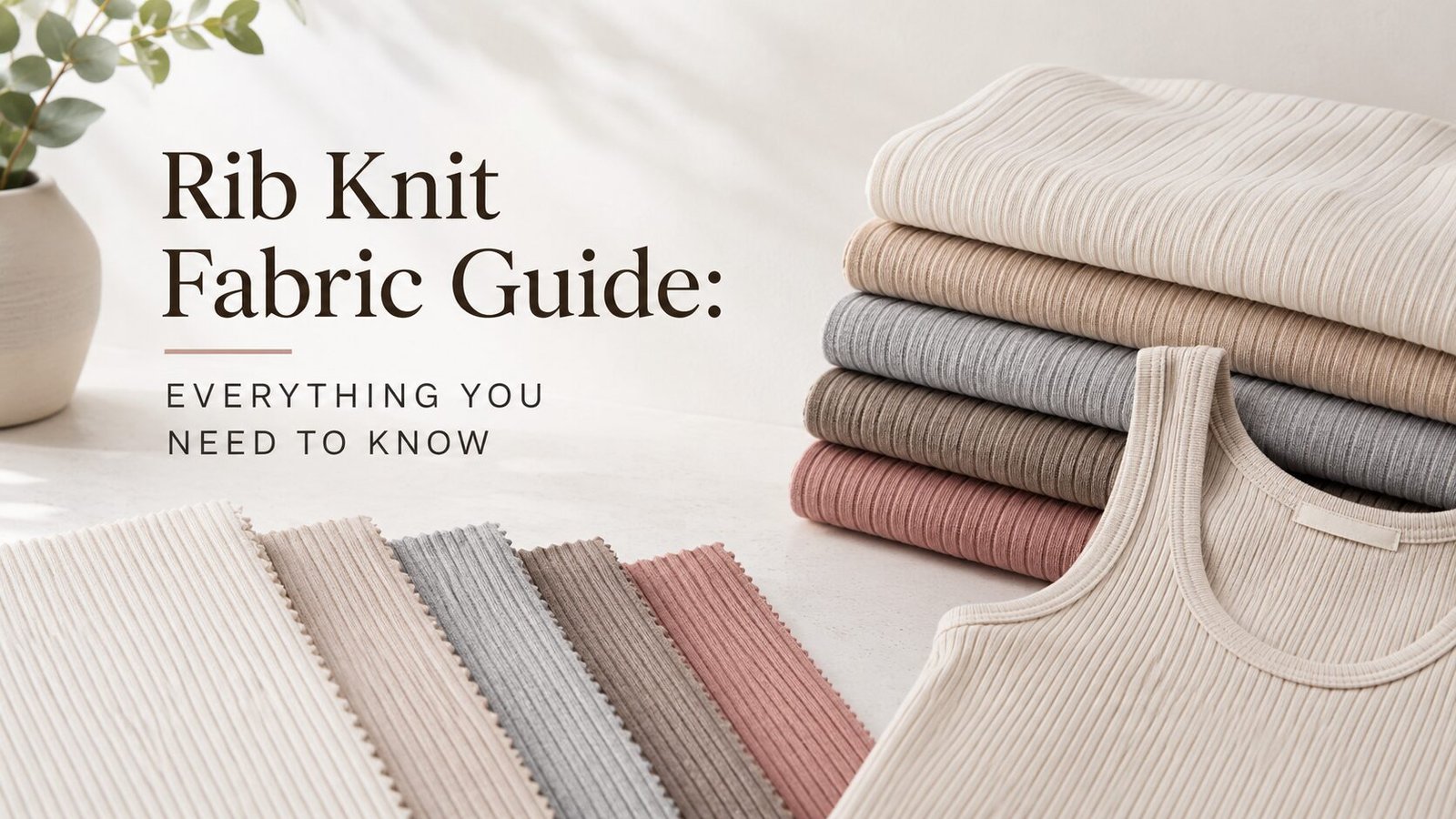
Every fashion brand, from minimalist loungewear labels to high-end contemporary lines, has shared a common staple in their collections: rib knit fabric.
Its popularity comes from a practical balance: rib knit fabric has texture, elasticity, softness, and a more shaped appearance than many basic knit fabrics.
However, not all rib knit fabrics perform the same way.This guide explains what rib knit fabric is, types and how to choose the right type for your clothing line.
What Exactly Is Rib Knit Fabric?
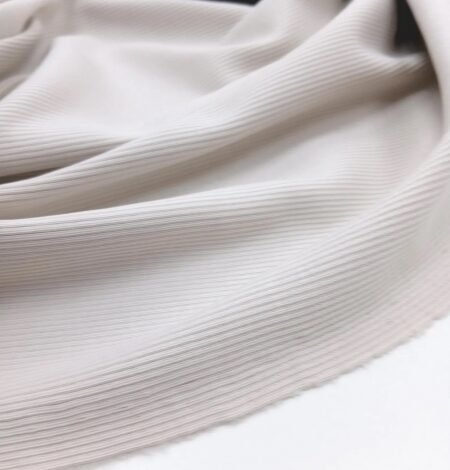
At its core, rib knit is a textured knit fabric characterized by its distinct vertical lines or “ribs.” Unlike jersey knit (the flat, smooth fabric used for standard T-shirts), rib knit is created on a double-bed knitting machine with two sets of needles.
By alternating knit and purl stitches, the machine creates a reversible fabric with raised rows on both the face and the back.
Rib Knit vs. Jersey Knit: The Core Difference
- Jersey Knit stretches primarily widthwise, has a smooth face and a looped back, and the edges tend to curl when cut.
- Rib Knit stretches significantly in both directions (but especially widthwise), has identical textured vertical ridges on both sides, and lies completely flat when cut, making it much easier to handle during CMT (Cut, Make, Trim) production.
Type of Rib Knit Fabric
Rib knit fabric is made using a knitting structure that alternates raised and recessed stitches. In simple terms, some stitches face outward while others recede inward, creating the vertical ribbed effect.
1X1 Rib Knit
This is the finest ribbing. One wale (vertical row) of knit stitches alternates with one wale of purl stitches.
- Look & Feel: It looks relatively smooth from a distance but reveals its texture when stretched. It is lightweight, highly flexible, and soft.
- Best For: Lightweight base layers, premium T-shirts, infant onesies, and delicate neckbands on fine jersey tops.
2 X 2 Rib Knit
Two wales of knit stitches alternate with two wales of purl stitches.
- Look & Feel: The texture is highly visible and creates deeper “valleys” between the ridges. It offers significantly more elasticity and a heavier hand-feel than 1X1.
- Best For: Classic turtlenecks, fitted knit dresses, athleisure tops, and heavy-duty cuffs/hems for sweatshirts.
Wide Rib & Variegated (Random) Rib
For contemporary fashion brands, mills can create custom configurations like 3X3, 4X4, or alternating wide and narrow ribs. These are highly aesthetic and instantly elevate a simple silhouette into a premium designer piece without adding complex sewing details.
Key Characteristics of Rib Knit Fabric
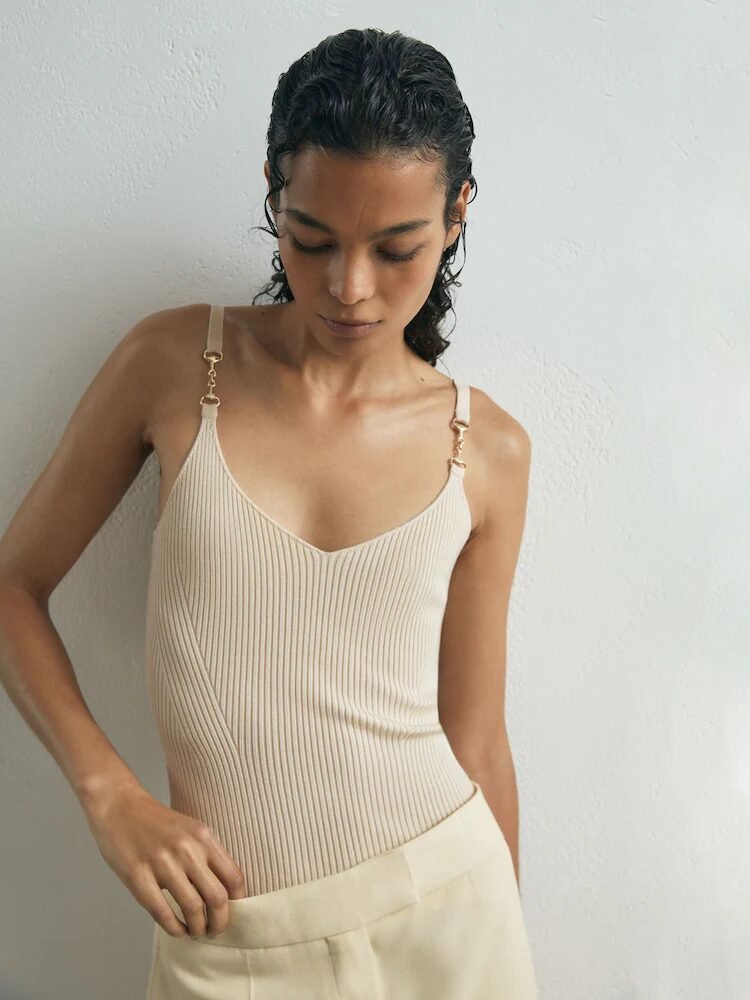
Stretch and Recovery
Because of its accordion-like structure, rib knit stretches massively without snapping or tearing.
More importantly, it features incredible stretch recovery—meaning it snaps back to its original shape without bagging out at the elbows or knees, even if the fiber blend contains zero spandex.
Body-Contouring Silhouette
The vertical lines create a natural optical illusion that elongates the body. When used for dresses or crop tops, it hugs the curves tightly while remaining incredibly forgiving.
Wrinkle Resistance
Due to the density of the knit structure, rib fabrics rarely wrinkle. This makes them a dream for e-commerce brands (less steaming required before packaging) and travel-friendly consumer collections.
Selecting the Right Fiber Blend
The fiber content dictates the price point, shrinkage, drape, and end-use of your garment. Here is how to choose the right raw material:
| Fiber Blend | Best Applications | Advantage | Disadvantage |
| 100% Cotton or Cotton/Spandex | Casual tees, loungewear, neckbands, babywear | Breathable, hypoallergenic, premium natural feel. | Can be prone to shrinkage if not pre-shrunk; colors fade faster over time. |
| Rayon / Modal / Bamboo Rib | Flowy midi dresses, luxury sleepwear, drapey cardigans | Incredible silky drape, cool to the touch, deep color vibrancy. | Very fluid; can sag if the garment is too heavy or lacks stabilizing seams. |
| Polyester / Nylon Blends | Activewear, performance tops, seamless athleisure | Moisture-wicking, highly durable, exceptional stretch recovery. | Less breathable than natural fibers; prone to pilling if low-quality poly is used. |
Points to Note When Using Ribbed Fabric
The processing of rib-knit fabrics requires a unique set of quality control parameters. If you are planning to use this fabric, please be mindful of the following three hidden traps:
The “Sheerness”
A white 2 X 2 cotton rib fabric might look completely opaque when lying flat on a cutting table. However, because rib knit expands significantly on the human body, those “valleys” open up when worn. If the fabric is too light (e.g., under 200 gsm), a fitted dress or top will become completely see-through on the bust or hips.
For fitted bottoms or dresses, source a minimum weight of 240-300gsm to ensure modesty.
Torque and Twisting
Knit fabrics inherently want to twist based on the rotation of the knitting machine. If a rib fabric is poorly finished, the vertical lines will begin to spiral diagonally around the wearer’s body after the first wash, ruining the symmetry of the garment.
Needle Cutting and Seam Popping
Because rib knit stretches so aggressively, standard straight stitching will snap the moment a customer puts the garment on. Clothing factory need use four-thread overlock (serging) stitches or flatlock seams with high-stretch textured polyester threads. Furthermore, if the sewing machine needles are too sharp, they will cut the yarns of the rib, creating tiny holes along the seams after a few wears.
How to Choose the Right Rib Knit Fabric?
Choosing rib knit fabric should start with how the garment will be worn. A fitted tank top, pajama set, and sweatshirt cuff all require a different balance of softness, stretch, recovery, and structure.
- Premium women’s loungewear: Modal rib or cotton-modal rib gives a softer hand feel and a more fluid drape.
- Casual basics: Cotton-spandex rib offers a practical balance of comfort, stretch, and durability.
- Athleisure-inspired styles: Nylon-spandex rib creates a smoother, more sculpted fit.
- Cuffs, collars, and waistbands: Heavier 2×2 rib or elastic rib helps the garment hold its shape after repeated wear.
Instead of choosing rib knit by touch alone, check how it performs in the final garment. A good rib fabric should recover after stretching, stay opaque when worn, and keep the neckline, hem, or cuff from becoming loose after washing.
Conclusion
Choosing the right rib knit fabric is about more than selecting a ribbed texture. For clothing brands, the key is to match the fabric structure, fiber content, rib width, weight, and recovery to the final garment.
Before moving into bulk production, always test the fabric through sampling. A well-chosen rib knit fabric can improve comfort, reduce fit issues, and help your clothing line feel more premium.