With the powerful rise of the “loungewear economy” and a global shift toward comfort-centric living, pajamas have evolved far beyond basic nightwear. Today, sleepwear is a multi-functional category blending comfort, fashion, and social-media-worthy aesthetics.
For fashion brand, launching or upgrading a sleepwear line offers massive market potential. However, while pajamas may seem structurally simple, the production supply chain is riddled with hidden technical traps.
Because sleepwear sits directly against the skin for hours and must perform while the body is moving during sleep, its requirements for skin-friendliness, freedom of movement, and durability are incredibly strict.
This comprehensive guide breaks down the three critical dimensions of Pajama Manufacturing—Fabric, Fit, and Construction—while highlighting how to avoid the costly production blunders that can drain your margins.
Fabric Selection: The Foundation of Sleepwear
In sleepwear manufacturing, fabric dictates your price point, user experience, and brand reputation.
Below is the 3 most prominent fabric used in modern premium pajama production:
| Fabric Type | Key Advantages | Manufacturing Risks |
| 100% Cotton (Combed Cotton, Flannel, Pima) | Naturally breathable, highly absorbent, anti-static, and universally accepted by consumers. Excellent for color retention and intricate prints.。 | Highly prone to wrinkling and shrinking. Fabric must undergo rigorous pre-shrinking before bulk cutting; otherwise, garments will drop a full size after the first consumer wash. |
| Bamboo & Modal (Knitted Blends) | The eco-friendly darlings of the modern market. Offers a silky, liquid-like drape, cool-to-the-touch feel, and superior moisture-wicking properties that won’t stiffen over time. | As highly elastic knit fabrics, they easily roll, stretch, and warp during cutting and sewing. Requires specialized machinery and highly skilled labor, increasing production time. |
| Pure Silk (100% Mulberry Silk) | The pinnacle of luxury positioning. Rich in amino acids, hypoallergenic, and naturally lustrous. Commands the highest retail margins. | Extremely delicate and slippery to handle. Highly susceptible to fabric shifting, snagging, and needle-hole damage during sewing. Brands must factor in higher raw material wastage and steep QC standards. |
GSM (Fabric Weight) and Seasonality
Precision in fabric weight—measured in Grams per Square Meter (GSM)—is make-or-break for seasonal utility.
For summer collections, we recommend lightweight woven silk or bamboo knits ranging between 110 – 140 GSM to ensure maximum breathability.
For fall/winter loungewear, transition to a heavier 180 – 240 GSM combed cotton interlock or premium fleece-backed flannel.
Children’s Sleepwear Flammability Regulations
If your brand plans to manufacture children’s pajamas, you are stepping into a heavily regulated minefield. Under agencies like the U.S. Consumer Product Safety Commission (CPSC) and EU equivalent bodies, children’s sleepwear must either pass strict vertical flammability testing or be engineered into ultra-specific snug-fitting dimensions to prevent fabric from catching fire.
Launching a children’s sleepwear line without certified fabric testing can result in catastrophic product recalls and severe legal penalties.
Fit: Balancing Comfort and Style
Developing a pajama pattern requires a completely different logic than designing standard ready-to-wear or tailored apparel. While fashion aims to sculpt, structure, and flatter bodily contours, the soul of sleepwear is zero restriction. When drafting tech packs, you need to learn the calculation of “Design Ease.”
Calculating the “Movement Ease” Factor
The human body stretches, twists, and expands significantly more when sleeping, tossing, or lounging than it does when standing. While a standard fashion blouse might require 4 – 6cm of ease across the chest, a classic button-up pajama top requires a generous 12 – 16 cm of design ease. Similarly, the trouser rise and hip measurements must be deeply scooped and widened to prevent the fabric from binding or pulling painfully when the wearer sits cross-legged or curls up.
Pattern Highlights for Key Sleepwear Silhouettes
Classic Button-Up Sets:
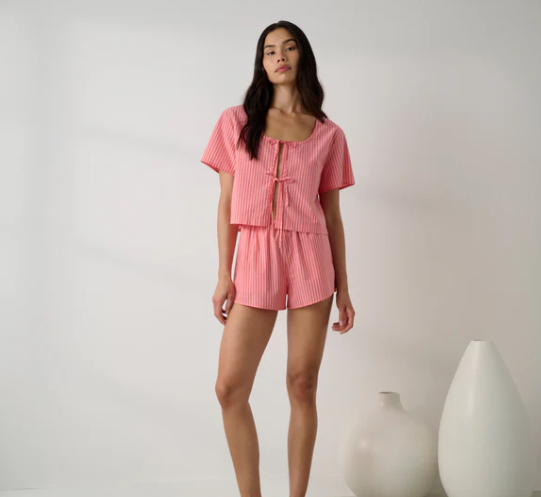
The magic lies in the waistband. The elastic band must be a premium, high-stretch, latex-free elastic.
A golden rule of thumb: at maximum stretch, the elastic waistband should expand to at least 1.8 times its relaxed length to ensure it never constricts the stomach while retaining its shape over hundreds of washes.
Slip Dresses & Nightgowns:
The priority here is adjustable utility and security. Bustlines must feature subtle contouring to prevent gaping, and adjustable straps should use premium, hypoallergenic plated metal hardware rather than cheap plastic, which snaps easily and irritates the skin when warm.
Oversized Loungewear:
This category capitalizes on the trendy, effortless “effortless chic” aesthetic, but it easily slips into looking bulky or sloppy. The technical secret lies in balancing the angle of the dropped shoulder with a calibrated armhole depth, ensuring that when the wearer raises their arms, the entire hemline doesn’t ride up aggressively.
Design & Construction Considerations
In garment production, the devil is always in the details. For next-to-skin sleepwear, every seam line, and trim choice directly influences whether a customer choose.
Premium Seam Architecture: Eliminating Friction
Standard 5-thread overlock stitching is cheap and fast, but the exposed, scratchy thread ridges it leaves on the inside of a garment can cause unbearable skin irritation during a night of tossing and turning.
High-end Pajama Manufacturing relies on two superior construction methods:
- French Seams: Ideal for luxury silk and premium woven cotton pajamas. This technique encloses the raw fabric edges entirely inside a double-folded seam, leaving the inside of the garment just as smooth and clean as the outside.
- Flatlock Stitching (4-Needle 6-Thread): The gold standard for modal, bamboo, and knit jerseys. This specialized stitch butts fabric edges flat against each other without overlapping, creating an entirely seamless feel against the skin.
“Invisible” Trims and Hardware
Traditional woven woven labels stitched into the back neck are the number one cause of post-purchase complaints. Forward-thinking loungewear brands have completely replaced back-neck woven labels with tagless heat-transfer labels or ultra-soft satin labels moved to the lower inner left seam.
Additionally, front-placket buttons should be flat, smooth-edged natural mother-of-pearl or high-grade resin to prevent them from pressing painfully into the chest when sleeping on one’s stomach.
Costly Mistakes to Avoid in Bulk Production
During the mass production phase, brands must implement strict quality control (QC) checkpoints or supply detailed Tech Packs to safeguard against these three common manufacturing failures:
Error 1: Misaligned Pattern Matching
If your pajama design utilizes bold plaids, stripes, or directional prints (like luxury repeating monograms), layout and cutting require extreme precision. If the stripes on the left and right sides of the front placket do not line up horizontally, or if the pocket print is misaligned with the body fabric, the garment instantly looks cheap and defective. You need factor an extra 10% to 15% fabric wastage allowance into their budgeting specifically for precise pattern-matching.
Error 2: Ignoring Light-Color Transparency
White, blush pink, and cream are evergreen bestsellers in the sleepwear world. However, if a brand pushes the factory to make the fabric overly lightweight for summer, it becomes entirely see-through.
Brands must conduct opacity tests under both natural and harsh indoor lighting during the proto stage—remedying transparency issues by adjusting yarn density or utilizing double-layer panels where necessary.
Error 3: Poor Color Fastness and Chemical Odors
Deep, saturated colorways (like navy, burgundy, and rich black) are notorious for color bleeding during initial washes. If the color fastness rating falls below Grade 4, the dye will bleed onto the consumer’s bedsheets. Furthermore, low-tier dye houses often leave residual chemical smells on the fabric.
Premium manufacturing partners perform intensive color-fixing washes and thorough deodorizing cycles before packing, ensuring that when a customer opens your polybag, there is zero chemical odor.
Conclusion
Creating a pajama set that consumers truly “never want to take off” requires a harmonious blend of premium textile sourcing, anatomical pattern ease, and hyper-focused construction details. In the intricate world of Pajama Manufacturing, understanding and proactively preventing fabric shrinkage, regulatory non-compliance, and pattern misalignment is your brand’s ultimate defense line for securing high margins and lifelong customer loyalty.
Ready to Transform Your Sleepwear Concepts into Premium Reality? With over a decade of specializing in high-end loungewear and pajama manufacturing, we provide an all-in-one supply chain solution—from eco-conscious fabric development and precision prototyping to strict bulk QC. Contact our product experts today to request a complimentary fabric swatch book and technical consultation!