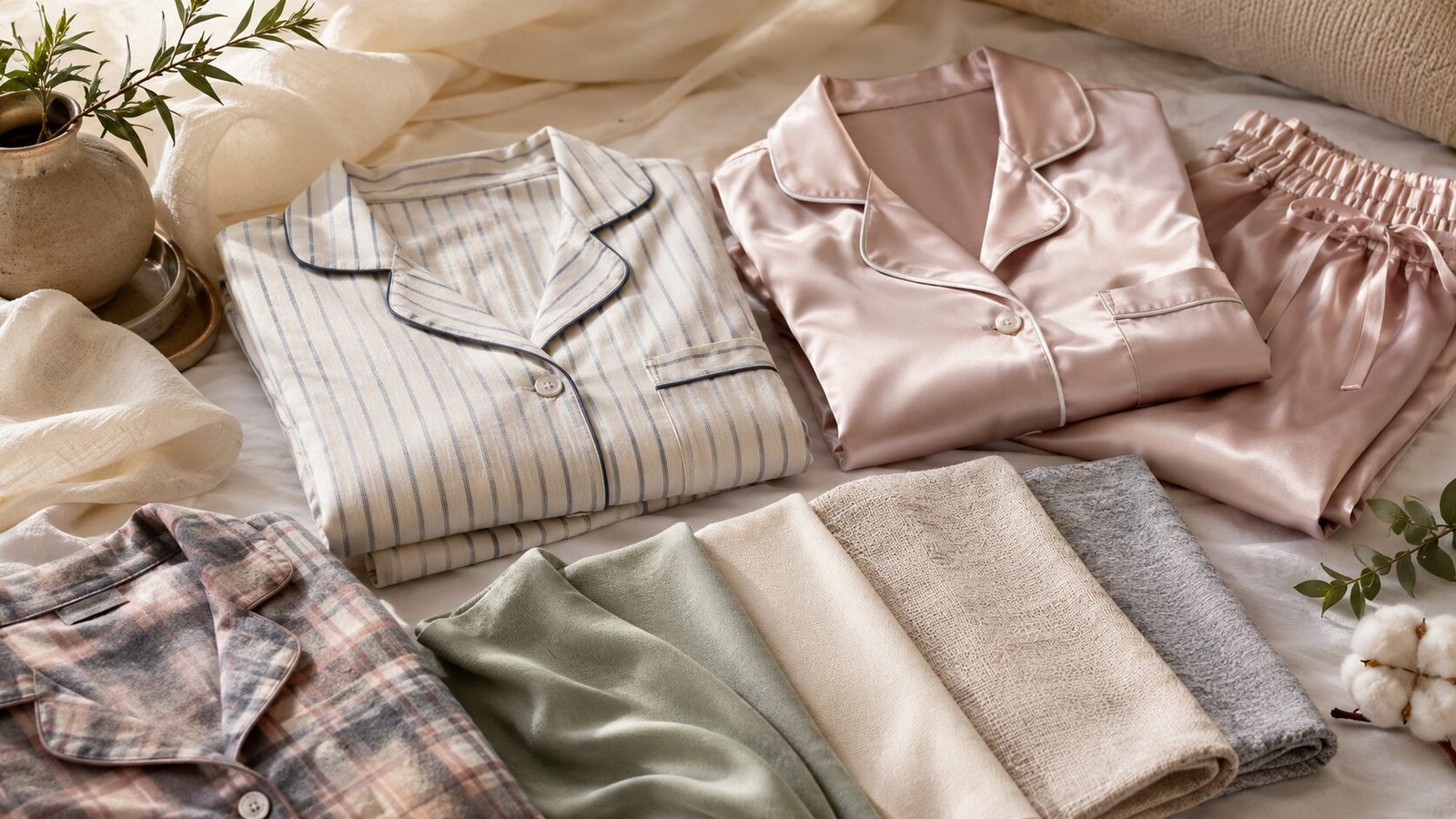
The right pajama fabric can make a big difference in how sleepwear feels in daily life. A set may look beautiful at first glance, but if the fabric feels too warm, or rough, it will not be comfortable for sleeping or relaxing at home.
In this guide, we introduce 10 common fabrics used for pajamas, Whether you are choosing pajamas for yourself or developing a sleepwear collection, understanding fabric is the first step toward better sleepwear.
How to Choose at a Glance:
- If you melt at night: Choose Bamboo Viscose, Tencel Lyocell, or Linen. They pull moisture away and feel instantly cool.
- If you are always freezing: Choose Cotton Flannel or Microfleece. They trap your body heat to keep you cozy.
- If you have sensitive skin: Choose Organic Cotton Jersey or Pure Silk. They are incredibly gentle and won’t scratch.
- If you want luxury that lasts: Choose Supima Cotton. It’s the ultimate durable luxury for everyday wear.
The 10 Best Pajama Fabrics
1. Bamboo Viscose ( Best for Hot Sleepers)
Bamboo has completely taken over the sleepwear world, and for good reason. It feels buttery soft, almost like a lightweight liquid against your skin.
- Why it rules: Bamboo is a natural master at temperature regulation. If you get hot, it cools you down. It’s also incredibly good at absorbing moisture—way better than standard cotton—so you won’t wake up in a puddle of sweat.
- The downside: It takes a little longer to dry when you wash it, and low-quality versions can pill (get those little fuzzy balls) over time.
2. Tencel Lyocell (The Silky Dry Wonder)
Tencel is made from sustainably sourced wood pulp (usually eucalyptus). It feels very similar to silk but behaves like high-tech activewear.
- Why it rules: It has an naturally cool-to-the-touch feel. It manages moisture so efficiently that it actually prevents bacteria from growing, which keeps your pajamas smelling fresher for longer.
- The downside: It creates a very fluid, drapey clothing style. If you prefer structured, crisp pajamas, Tencel might feel a bit too loose and slippery.
3. Cotton Linen (Summer Vacation Vibe)
Linen is made from the flax plant and is famous for its loose, open weave. It is a favorite in European and coastal boutiques for hot summer nights.
- Why it rules: It is highly breathable—almost like wearing nothing at all. It dries incredibly fast and gets softer with every single wash. Plus, it has a relaxed, effortlessly stylish look.
- The downside: Linen wrinkles easily. If you hate the wrinkled look, this isn’t for you. It can also feel a bit stiff right out of the box until it goes through a few wash cycles.
4. Cotton Jersey ( Everyday Comfort)
Think of your favorite, perfectly broken-in vintage t-shirt. That is cotton jersey. It is a knit fabric, meaning it has a natural stretch to it.
- Why it rules: Going organic means no harsh chemicals against your skin while you rest. It’s breathable, easy to care for, and moves with your body when you roll over in bed.
- The downside: Regular cotton absorbs sweat but holds onto it. If you suffer from heavy night sweats, the fabric can stay damp for a while.
5. Pure Silk (Ultimate Luxury & Skin Savior)
Pure silk is the gold standard of high-end sleepwear. It is a natural protein fiber that feels unbelievably smooth.
- Why it rules: Silk reduces friction. If you have sensitive skin, allergies, or eczema, silk glides over your body without causing irritation. Bonus: it won’t absorb your face creams or body lotions while you sleep.
- The downside: High maintenance. True silk requires hand-washing or a very delicate cycle, and it is an investment.
6. Cotton Flannel (The Winter Champion)
When the temperature drops, nothing beats a pair of heavy-duty cotton flannel PJs. It’s a woven cotton that has been brushed on both sides to create a thick, fuzzy texture.
- Why it rules: Those tiny brushed fibers trap air, creating a warm layer of insulation around your body. It’s incredibly cozy for lounging on cold winter mornings.
- The downside: It is strictly for cold weather. If you wear this in the summer, you will overheat. It also has zero stretch.
7. Microfleece (For Sub-Zero Nights)
Fleece is a synthetic fabric designed to mimic wool, but microfleece is much thinner, lighter, and softer.
- Why it rules: It is incredibly lightweight but packs a massive punch when it comes to warmth. It dries almost instantly out of the wash and feels like a warm hug.
- The downside: Because it’s synthetic, it doesn’t breathe well. If you are a hot sleeper, fleece will turn your bed into a sauna.
8. Cotton Poplin (Crisp, Classic Look)
If you love the look of classic, button-down pajama sets with contrasting piping, you are looking at cotton poplin. It is a tightly woven, lightweight fabric.
- Why it rules: It feels crisp, clean, and structured. It doesn’t cling to your body, allowing air to circulate freely. It makes you look instantly put-together, even if you just rolled out of bed.
- The downside: It has no stretch. If you like to curl up tightly into a ball when you sleep, the lack of give might feel a bit restrictive.
9. Supima Cotton (The Luxury Upgrade)
If you love the ease of cotton but want something that feels premium, look for Supima (American-grown extra-long staple cotton).
- Why it rules: The longer fibers mean the yarn can be spun tighter and finer. The result is a pajama set that feels incredibly smooth, doesn’t pill, doesn’t fade, and lasts for years without wearing thin.
- The downside: It costs more than regular cotton, but the durability makes it worth it in the long run.
10. Performance Poly-Blend (Modern Athleisure Choice)
Forget the stiff, scratchy polyester of the past. Modern performance poly-blends are engineered to feel incredibly soft while working hard.
- Why it rules: These are perfect for people who love the feel of athletic loungewear. With the addition of spandex, they stretch wonderfully, never wrinkle, wash perfectly, and pull moisture away from your skin instantly. They are also the best option for traveling since they pack light.
- The downside: It is a synthetic fabric, so it lacks the natural, earthy feel of cotton or linen.
3 Simple Tips for Buying Your Next Pair of Pajamas
Before you click “Add to Cart,” keep these three practical rules in mind:
- Check the Fabric Tag: A lot of pajamas look like pure cotton or bamboo online but are actually mostly cheap polyester when you check the label. Always look at the fiber percentages.
- Size Up for Sleep: Your day clothes should fit perfectly, but your sleepwear should be loose. Tight waistbands or restrictive shoulders can disrupt your sleep. When in doubt, buy one size larger.
- Think About the Seams: Even the best fabric will irritate you if the tags are scratchy or the seams are thick and bulky. Look for flat seams or tagless options.
Conclusion
There is no one perfect fabric for every pajama.The best fabric depends on the season, style, price point, and customer expectation.
For consumers, understanding fabric helps you choose pajamas that feel better in daily life. For brands, good fabric selection helps create sleepwear that looks beautiful, feels comfortable, and performs well in production.