In the contemporary apparel market, the boundary between casual comfort and premium lifestyle wear has permanently blurred. Loungewear is no longer just a category for sleepwear or basic fleece; it has evolved into a highly competitive segment where consumers demand technical performance, aesthetic versatility, and exceptional durability.
For designers and emerging brands, developing a successful loungewear collection requires moving beyond superficial design. It demands a deep understanding of textile engineering, structural tailoring, and meticulous factory execution.
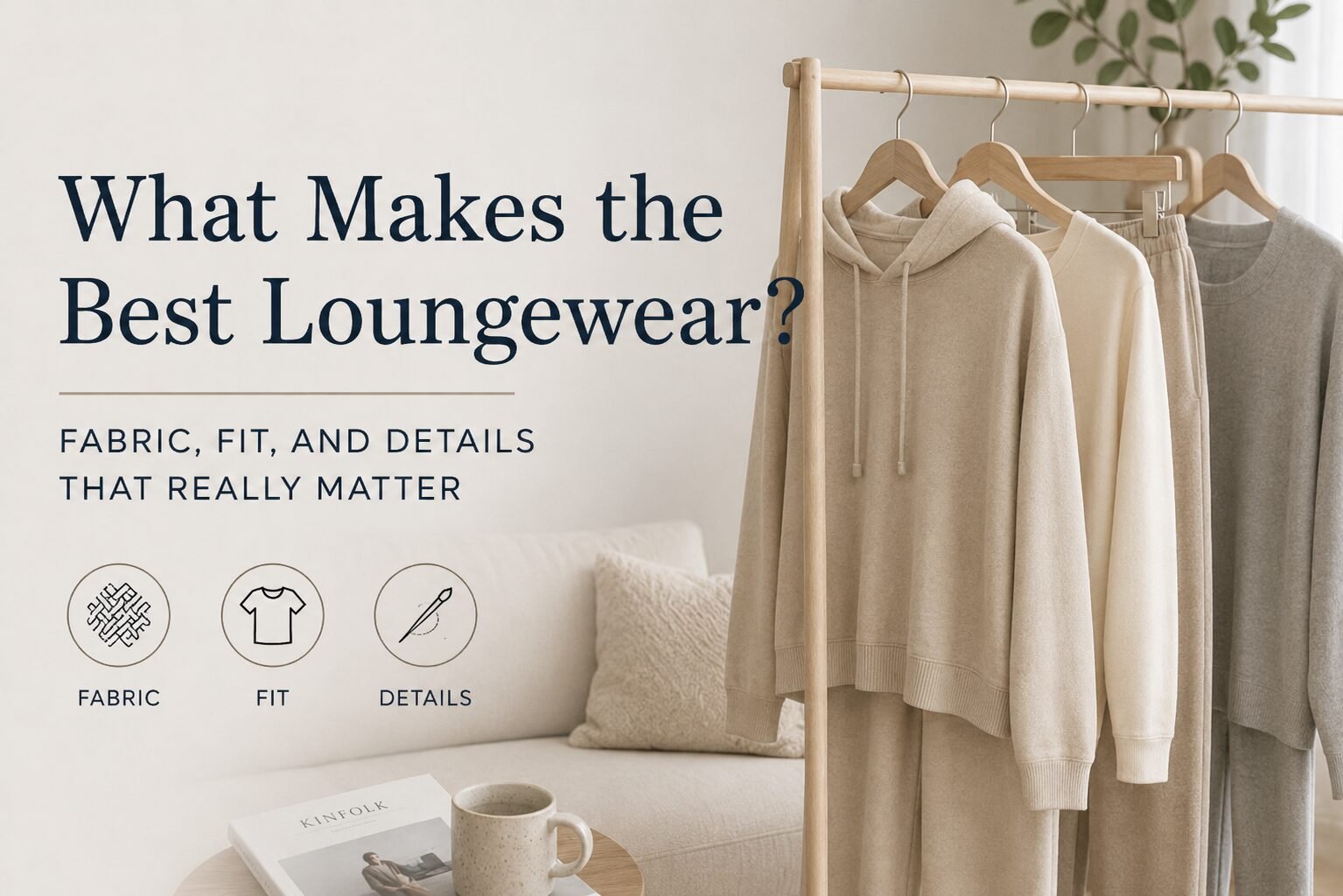
As a manufacturer, we see firsthand that the line between a markdown garment and a high-margin hero product comes down to three foundational elements: fabric, fit, and the tiny details people usually ignore.
The Quick Quality Check:
- Fabric: Is it mostly natural/semi-synthetic (Cotton, Modal, Bamboo) rather than pure polyester?
- Weight: Does it feel substantial, or is it thin and see-through?
- Hardware & Seams: Are the drawcords capped with metal or clean aglets? Are the seams smooth?
1. Fabric Selection
Fabric is the single most critical investment in loungewear development. While consumers judge a garment by its initial touch, brands must evaluate fabric based on its weight, drape, breathability, and long-term performance through multiple wash cycles.
Semi-Synthetic and Natural Blends
To achieve the luxurious “second-skin” feel that defines premium loungewear, standard carded cotton is rarely enough. The industry’s most resilient collections utilize a strategic mix of long-staple fibers and cellulosic semi-synthetics:
| Fabric Type | Technical Characteristics | Brand & Design Benefit |
| MicroModal / Tencel | Extracted from beechwood/eucalyptus pulp; high moisture regain. | Delivers a fluid, silk-like drape and an inherent cool-to-the-touch sensation. |
| Long-Staple Cotton | Pima or Egyptian variants; long, continuous cotton fibers. | Maximizes tensile strength, minimizes pilling, and softens with age. |
| Bamboo Viscose | Naturally round fiber structure; highly absorbent. | Provides exceptional breathability and a distinct, premium weight. |
The Synthetic Fabric
While 100% polyester fleece is cost-effective and offers instant warmth, it lacks breathability, traps body heat, and is prone to severe pilling after minimal wear—factors that trigger high return rates.
A sophisticated product line typically limits synthetic composition to less than 30%. Integrating a minor percentage of recycled polyester or nylon improves dimensional stability, prevents the fabric from bagging out at stress points, and speeds up drying times without compromising the hand-feel.
2. The Architecture of Fit
Designing loungewear requires a different approach than tailored apparel or activewear. It demands a concept we refer to as “Structured Slouch”—creating an illusion of effortless relaxation while maintaining a clean, sophisticated silhouette.
Shoulder Anchor
An oversized silhouette should never look accidental. To keep a garment looking high-end, the shoulder seam must serve as an anchor. Whether utilizing a precise drop-shoulder or a classic raglan sleeve, the upper chest and armhole must be meticulously calculated so the fabric flows without creating bulk under the arms.
Taper and Cuff Ratio
For lounge pants and joggers, the pattern must allow ease through the seat and thigh for movement, but feature a subtle, engineered taper toward the ankle. This ensures the wearer looks presentable outside the home.
Fabric Weight:
Fabric weight dictates how a garment hangs. For lightweight, summer-friendly lounge sets, a weight of 180–220 GSM provides breathability. For cozy, structural fall/winter collections, we recommend a mid-to-heavy fleece or French Terry ranging from 300–380 GSM. This weight allows the fabric to mask body contours elegantly rather than clinging to them.
Manufacturing Finish
A consumer may buy a garment because of its color or marketing story, but they return to a brand because of its construction. The small, often invisible choices made on the factory floor dictate the lifespan of the product.
Anti-Twist Waistbands:
One of the most frequent consumer complaints is the elastic band twisting inside the waistband channel during laundry cycles. Premium manufacturing resolves this by using multi-needle topstitching or internal tacking to secure the elastic permanently, keeping the waistband flat and comfortable.
Low-Friction Seams:
Standard overlock seams can feel abrasive during periods of extended rest. Implementing flatlock or active-stitching ensures that the seams lie completely flat against the skin, eliminating friction points and elevating the garment’s internal aesthetics.
Ribbing Resilience:
Cuffs and collars require structural memory. Standard self-fabric ribbing often loses shape quickly. Incorporating 3% to 5% high-grade elastane (Spandex) into the rib knit ensures that sleeves can be pushed up and necklines pulled over the head without permanently stretching out.
Premium Componentry:
Drawcords should feature custom metal aglets or clean, heat-shrunk tipping rather than simple knots. Labels should be screen-printed directly onto the fabric or made from ultra-soft satin to prevent skin irritation.
Product Development Checklist
When reviewing your tech packs for an upcoming loungewear launch, utilize this quick structural checklist to ensure the collection aligns with premium market standards:
- Material Matrix: Prioritize high-staple natural fibers or cellulose bases; keep synthetics low to ensure thermal comfort.
- Shrinkage Control: Request pre-shrunk or garment-washed fabric samples to lock in the fit before bulk cutting.
- Stress Points: Ensure bartacks or reinforced stitching are applied to pocket openings and side slits.
True luxury in loungewear isn’t about complexity; it is about execution. By pairing an intentionally engineered fabric with refined, durable factory finishes, your brand can move away from transactional fast-fashion and establish a loyal customer base that recognizes and trusts your quality.