Choosing the right loungewear fabric has a direct impact on how a garment feels on the body, how it holds its shape after washing, and how customers perceive the value of your collection. In women’s loungewear, the difference between a piece that feels casual and one that feels refined often starts with the fabric, not the silhouette.
This guide explains how to select fabric for a women’s loungewear line from a practical product development perspective,so you can make more informed decisions before production begins.
Quick Comparison: Premium Loungewear Materials
Before diving into the technical details, here is a quick-glance matrix comparing the primary options available for modern loungewear lines:
| Fabric / Blend | Hand-Feel & Texture | Ideal For | Best Season | Target Position |
| Micro-Modal / Bamboo | Ultra-silky, fluid, cooling | Sleepwear, slip dresses, light robes | Summer / Spring | Luxury / High-End DTC |
| Linen Blends | Textured, airy, crisp yet soft | Resort-lounge, wide-leg pants, button-downs | Summer | Premium / Sustainable |
| Cotton Jersey / Rib | Smooth, stretchy, reliable | Everyday tees, henleys, body-con sets | Year-Round | Contemporary Essential |
| French Terry / Waffle | Looped/grid interior, structured | Mid-weight hoodies, joggers, spa robes | Fall / Transition | Premium Athleisure |
| Brushed Fleece | Fuzzy, plush, maximum warmth | Heavyweight oversized sweatshirts, winter joggers | Winter | Streetwear / Cozy Cozy |
Key Performance Metrics for Loungewear Fabrics
Before looking at specific materials, define what your loungewear must deliver.
- Skin-Feel (Hand-Feel): Loungewear is worn directly against the skin for extended periods. It must feel exceptionally soft and free of friction.
- Fabric Weight (GSM): Grams per Square Meter (GSM) dictates the season and drape. Lightweight fabrics (140 – 180 GSM) work best for summer sleepwear, while mid-to-heavyweight fabrics (220 – 320 GSM) are ideal for structured hoodies, joggers, and robes.
- Dimensional Stability & Recovery: To prevent sagging at the knees and elbows, look for fabrics with a 4-way stretch, usually achieved by blending 5% to 8% elastane (Spandex).
- Pilling Resistance: Synthetic and poorly spun yarns fuzz and pill rapidly under friction. Premium brands prioritize long-staple fibers and specific enzyme washes to combat this.
The Raw Materials: Premium Fiber Compositions
Before deciding on the texture or weight, you need select the base fiber. In the loungewear sector, fibers are generally split into luxury cellulosics and structured naturals.
Modal & Micro-Modal (The Premium Choice)
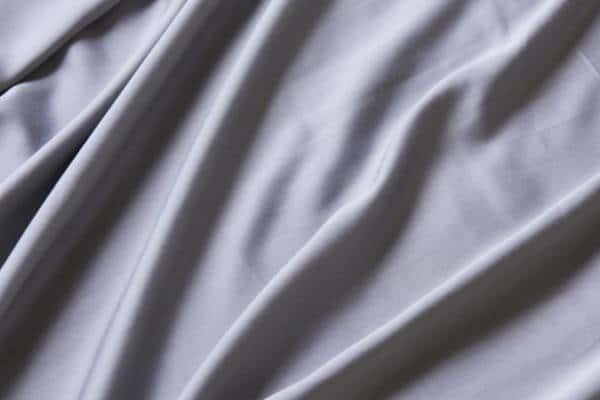
Derived from sustainably harvested beechwood pulp (such as Tencel™ Modal), this fiber is the gold standard for high-end lounge and sleepwear. It offers an incredibly silky drape and a natural cooling sensation.
- Key Advantage: Highly breathable, fade-resistant, and maintains softness after multiple washes.
- Common Blends: Often blended with $5\%-8\%$ Spandex for stretch recovery, or with cotton to add body.
Bamboo Viscose (The Eco-Conscious Softness)
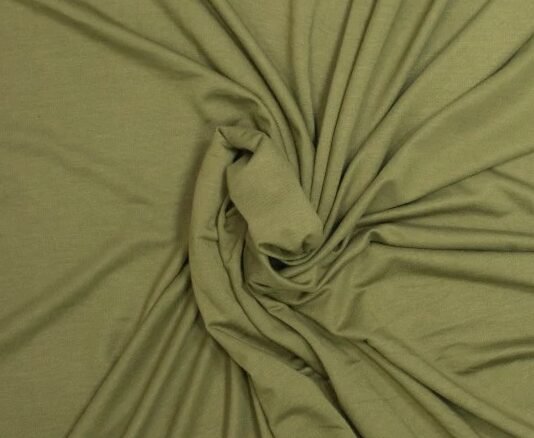
Bamboo has surged in popularity among contemporary DTC brands. It has an ultra-soft hand-feel that rivals silk but is much easier to maintain.
- Pros: Naturally hypoallergenic, moisture-wicking, and possesses a subtle, luxurious sheen.
Linen & Linen Blends (The Resort-Lounge Luxury)
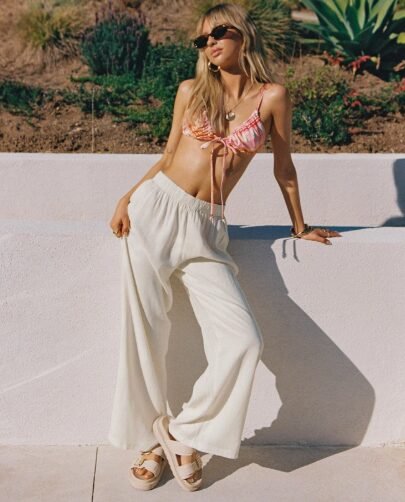
Linen, made from flax fibers, brings a sophisticated, relaxed aesthetic to summer loungewear. It is naturally breathable and possesses a beautiful, slubby texture.
- Key Advantage: Unmatched thermoregulation in hot climates and a high-end “resort-wear” appeal.
- Note: Pure linen creases heavily. For loungewear, we highly recommend blending linen with viscose, modal, or cotton (e.g., 55% Linen / 45% Rayon). This retains the signature linen look while dramatically improving softness and wrinkle recovery.
Long-Staple Cotton & Organic Cotton (The Classic Essential)
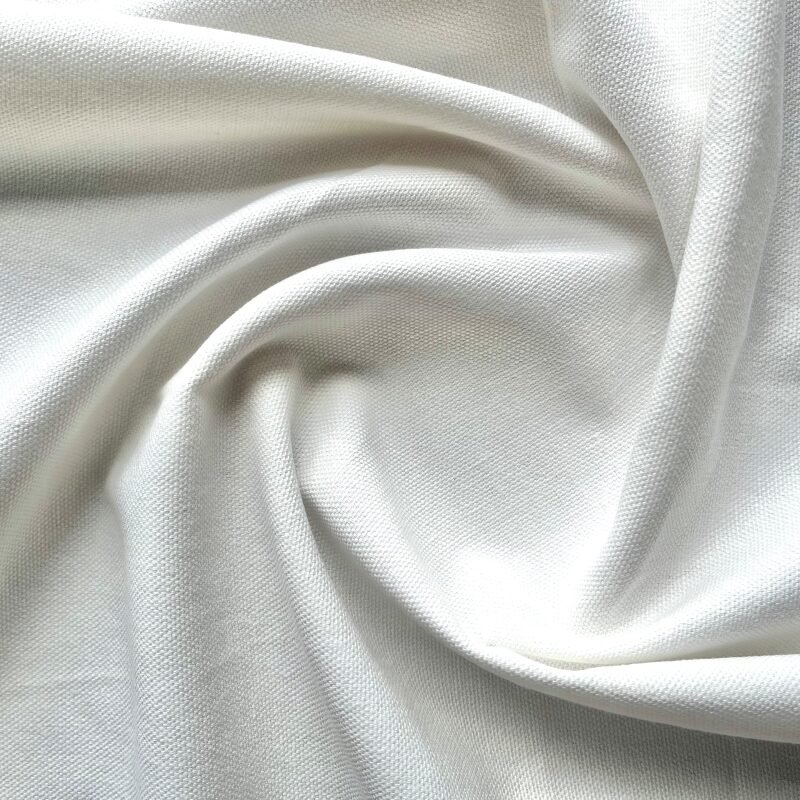
For brands aiming for a more structured, classic athleisure aesthetic (think elevated sweatpants and crewnecks), organic cotton is irreplaceable.
- Key Advantage: Highly durable, crisp yet soft, and carries a strong sustainability marketing appeal for eco-conscious consumers.
Fabric Structures: Choosing the Right Knit for Your Designs
The fiber specifies what the fabric is made of, but the knit structure determines how it performs, stretches, and looks.
Here are the five essential fabric constructions every loungewear brand need to know:
Cotton Jersey (The Lightweight Everyday Classic)
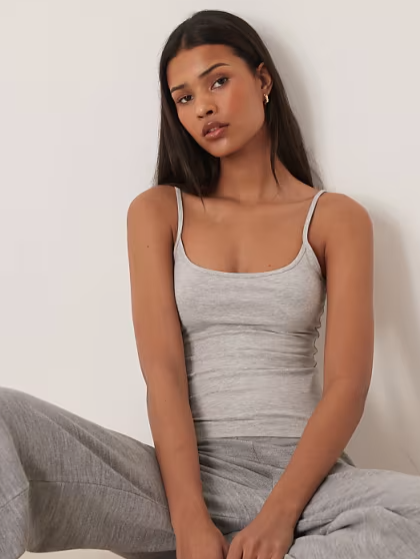
Jersey is a flat, single-knit fabric with a smooth right side and a textured wrong side. It is the most ubiquitous knit in apparel.
- Best For: Classic lounge tees, lightweight tank tops, and fluid pajama sets.
- Note: While 100% cotton jersey is traditional, adding Modal or Bamboo creates an elevated, luxury jersey with a fluid drape that doesn’t cling to the body.
Rib Knit (The High-Elasticity Body Hugger)
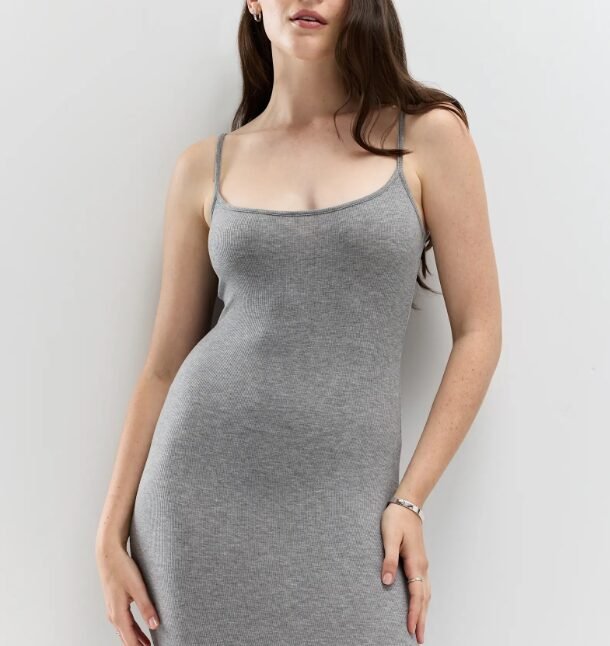
Rib knit features alternating vertical ridges. Because of its structure, it offers significantly more crosswise stretch than jersey without requiring excessive Spandex.
- Best For: Form-fitting lounge dresses, henley tops, and wide-leg lounge pants.
- Rib Knit Type:Narrow ribs (e.g., 1×1) offer tight, seamless stretch perfect for cuffs. Wide ribs (e.g., 2×2 or 4×2) create bold, textured vertical ridges, offering a beautiful drape ideal for stylish garments and outerwear.
French Terry (The Mid-Weight Athleisure Staple)
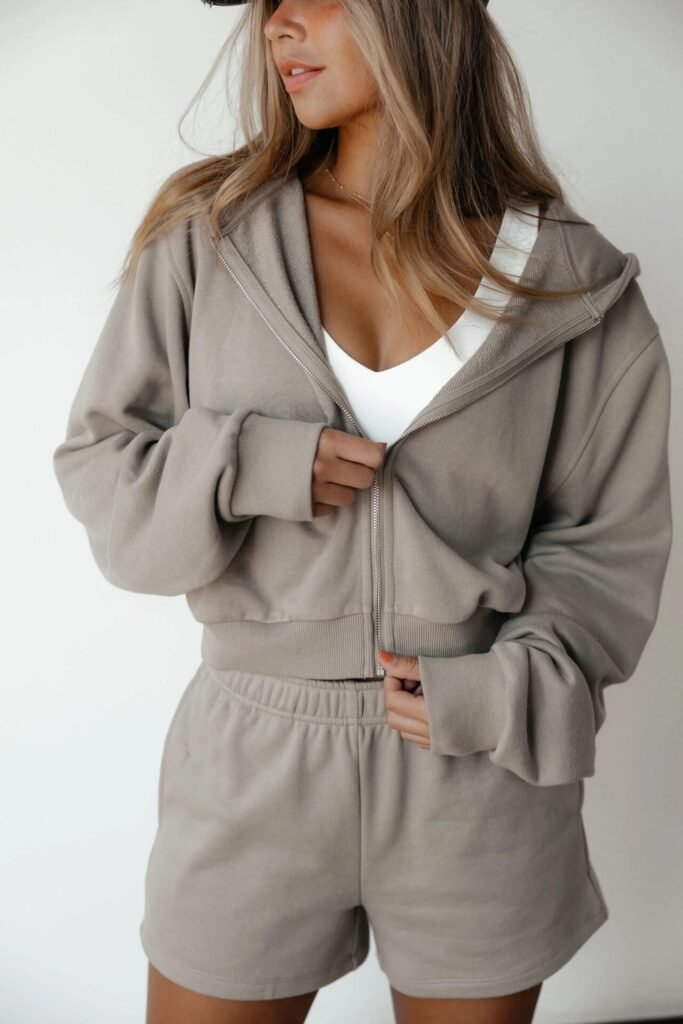
French terry is a knit fabric featuring loops on the reverse side and a smooth surface on the face. It is heavier than jersey but lighter than fleece.
- Best For: Premium sweatshorts, relaxed crewnecks, transition-season hoodies, and joggers.
- Sourcing Note: For a premium look, source “100% Cotton Face” French terry. This ensures the exterior is ultra-smooth for printing or embroidery, even if the loops utilize a polyester blend for stability.
Waffle Knit / Thermal (The Textured Comfort)
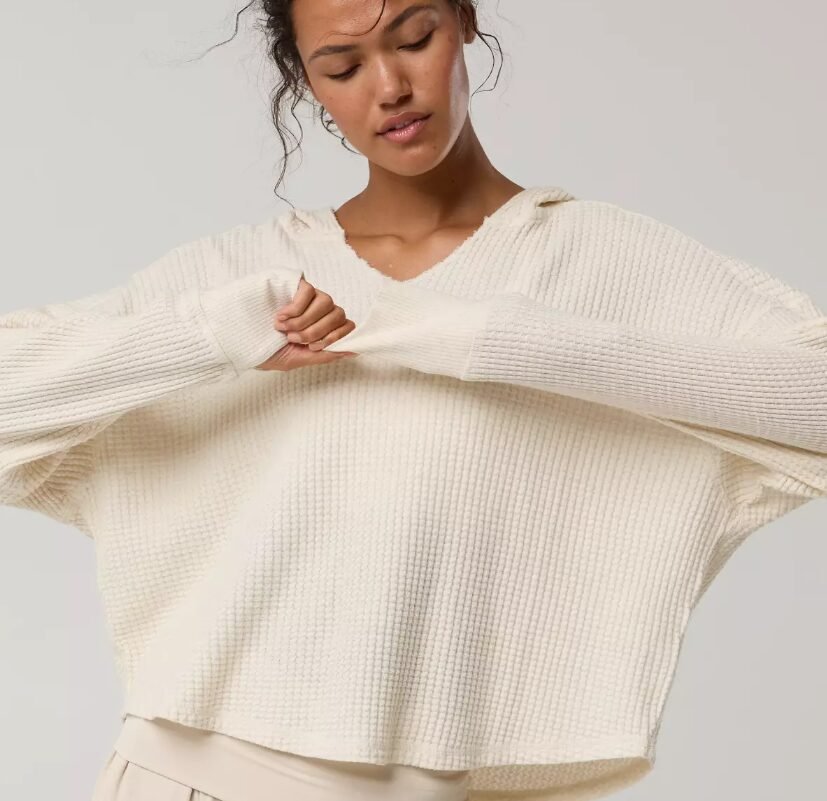
Characterized by its distinct grid-like pattern, waffle knit traps air within its recesses, providing excellent thermal insulation while remaining highly breathable.
- Best For: Cozy winter lounge sets, traditional long-johns, and luxury spa-style robes.
- Sourcing Note: Waffle knit is prone to stretching out over time. Ensure incorporates a small percentage of elastane or utilizes a tight, high-gauge knit to maintain shape.
Fleece (The Maximum Warmth Heavyweight)
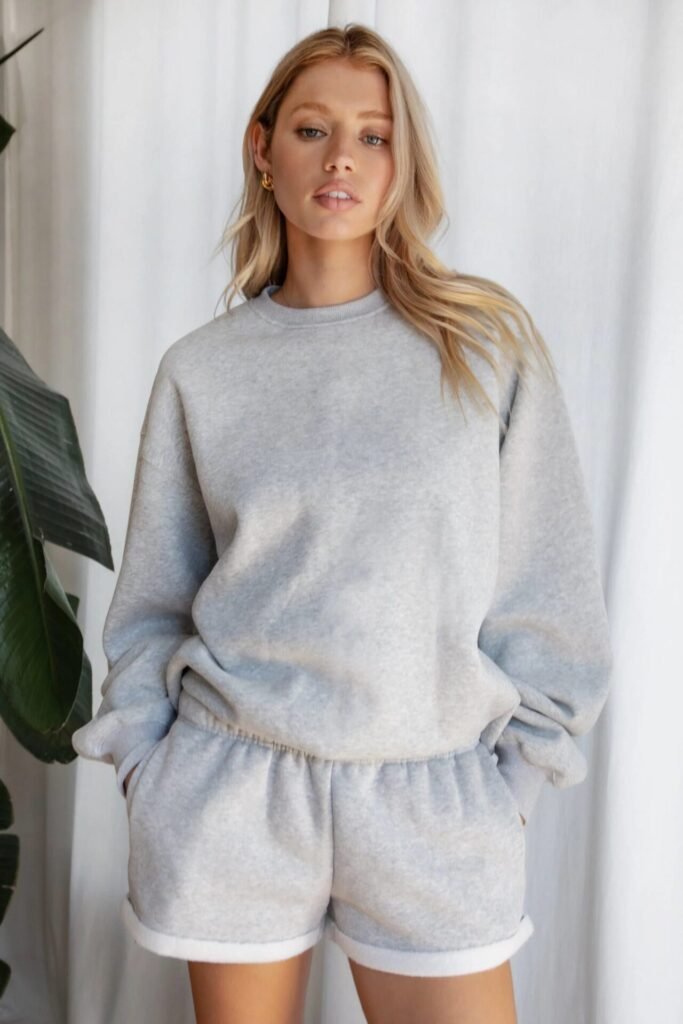
Fleece is typically a brushed fabric where the interior loops are shredded to create a soft, fuzzy nap that retains body heat.
- Best For: Heavyweight winter oversized hoodies, drop-shoulder sweatshirts, and cold-weather outdoor-lounge capsules.
- Sourcing Note: Cotton-poly blends (e.g., 80/20 Cotton/Poly) are highly recommended for fleece, as pure polyester fleece can cause static, while pure cotton fleece is incredibly heavy and slower to dry.
What Factors Influence Fabric Selection?
When finalizing your loungewear fabrics, you need balance creative vision with commercial reality. Three primary factors dictate the final selection:
Seasonality and Fabric Weight (GSM)
Fabric weight dictates the utility of the garment.
- Lightweight fabrics (140 – 180 GSM) are mandatory for summer sleepwear.
- Transitional or loungewear sets sit best at 200 – 250 GSM
- Heavy winter fleeces require 300 – 380 GSM to hold their structure.
Target Market Pricing
Premium cellulosics (Modal, Bamboo) and Linen command higher raw material costs but allow brands to position themselves in the luxury or high-end DTC segment. Conversely, engineered cotton-poly blends offer cost efficiency and high durability for volume-driven market segments.
Manufacturing and Structural
You may want a heavy jogger, but choosing a fluid micro-modal jersey will result in a garment that sags and loses shape. The drape of the fiber must match the technical requirements of the silhouette.
FAQ
Pilling occurs when short fibers break and tangle under friction. You can mitigate this by utilizing long-staple combed cotton, choosing vortex-spun yarns, or requesting anti-pilling silicone or enzyme washes during the fabric finishing process.
Pure linen is rigid and prone to extreme wrinkling. Blending linen with viscose, cotton, or modal injects essential softness, improves skin-feel, and gives the fabric a much gentler, smoother drape while keeping the iconic linen aesthetic.
Cotton feels breathable and familiar, making it suitable for everyday casual pieces. Modal usually feels smoother and drapes more softly, which works well for premium lounge sets.
Conclusion
Selecting the right loungewear fabric is not only about softness. The best choice should support the way the garment is designed, worn, washed, and positioned in the market. A lightweight modal jersey ideal for relaxed lounge sets, while rib knit, French terry work better when the style needs more texture, shape, or structure.
If you are planning a custom women’s loungewear line, working with an experienced apparel manufacturer can help you choose suitable fabrics, develop samples, and refine each style before bulk production.