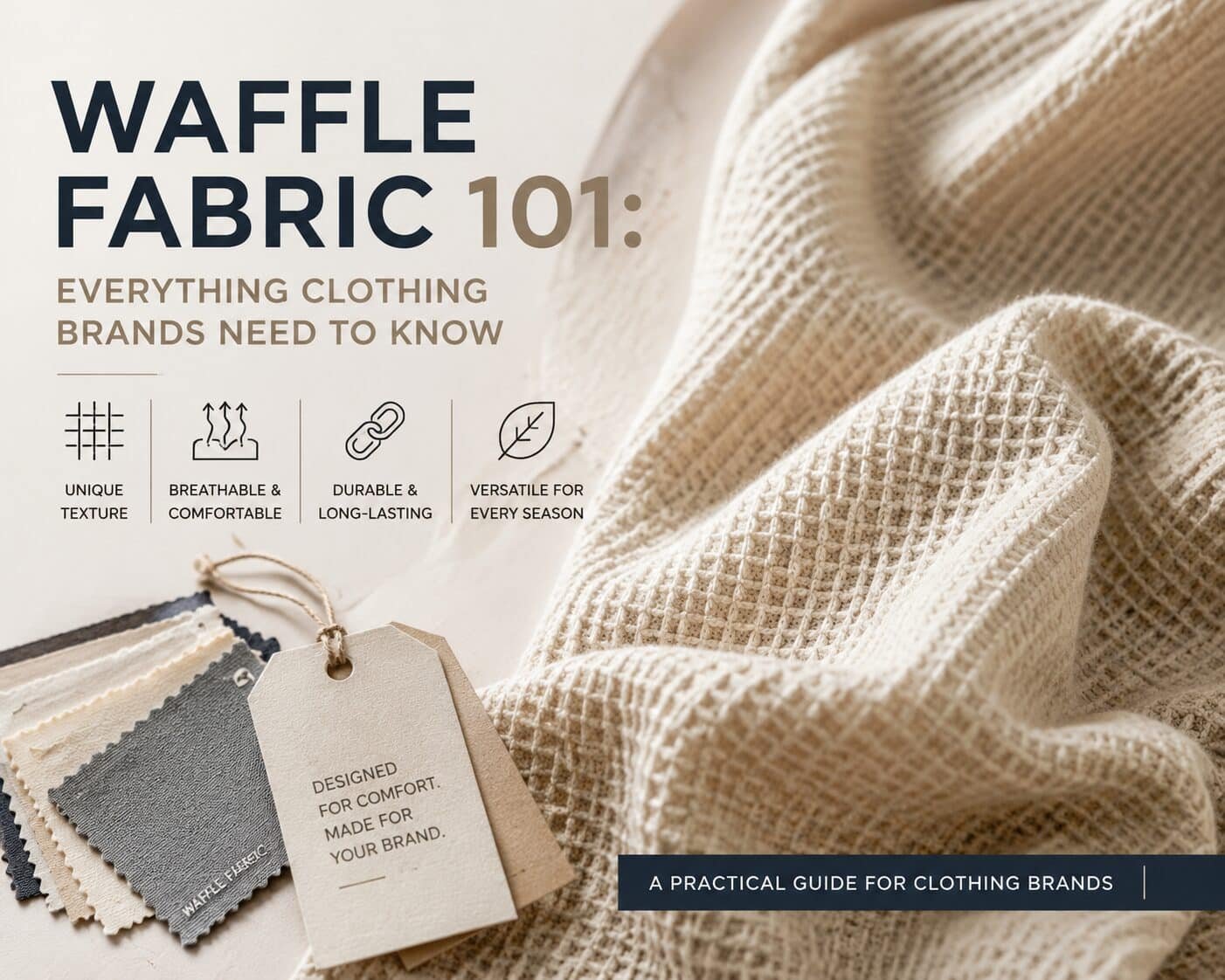
In the competitive landscape of fashion manufacturing, the “hand-feel” and visual texture of a garment are often what differentiate a premium product from a commodity. Waffle fabric—characterized by its distinct recessed grid pattern—has transitioned from a traditional thermal staple to a cornerstone of modern loungewear and elevated essentials.
For brand founders, understanding the technical DNA of waffle knit is crucial for making informed sourcing decisions that balance aesthetic appeal with functional durability.
What is Waffle Fabric?
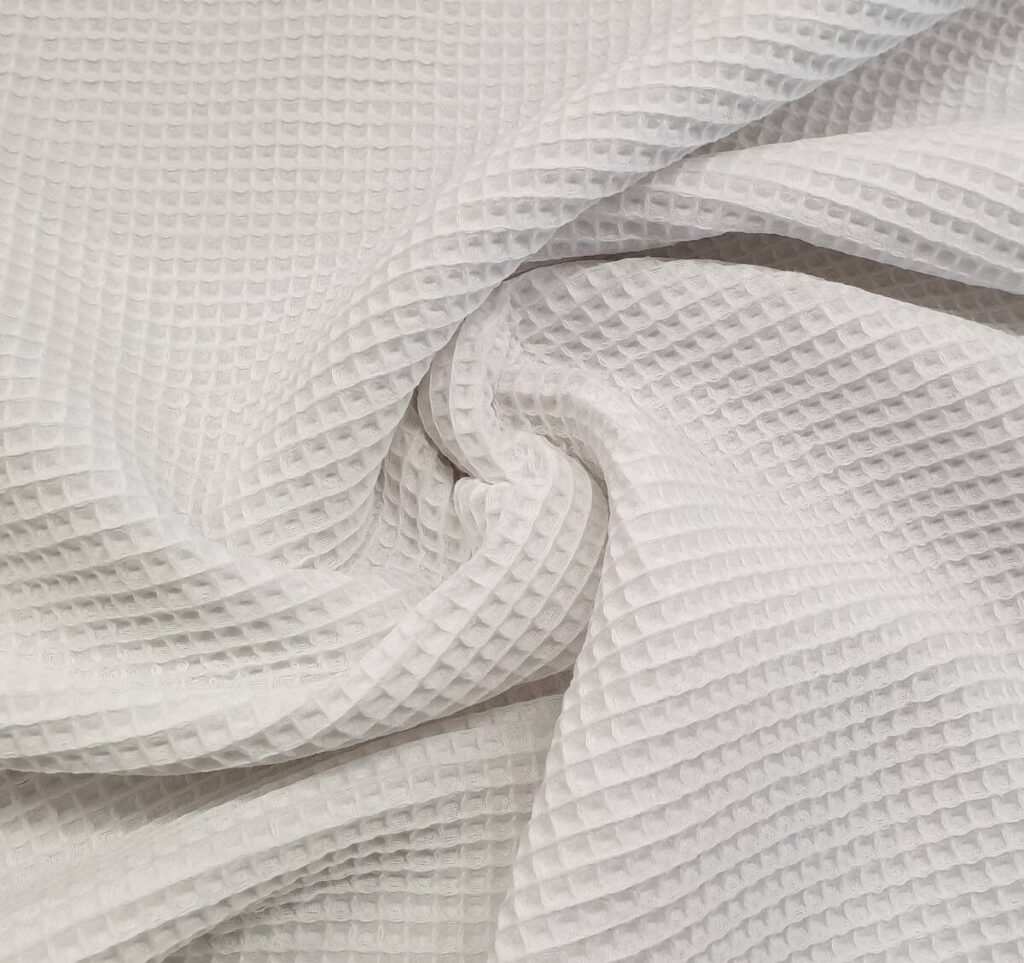
Waffle fabric, also known as honeycomb fabric, is created through a unique knitting or weaving process that produces a three-dimensional, textured surface. Unlike flat jerseys or interlocks, the “waffle” pattern creates a series of small squares that resemble a breakfast waffle.
While a “waffle weave” exists in home textiles (like towels), the apparel industry primarily utilizes waffle knit. This construction allows for greater elasticity and softness, making it ideal for garments that need to move with the body.
Why Waffle Fabric is a Staple for Modern Collections
The surge in demand for waffle-textured garments isn’t just about the “cozy” aesthetic; it’s rooted in the fabric’s inherent physical properties.
1. Superior Thermal Regulation
The recessed squares in the fabric act as miniature air pockets. These pockets trap body heat to provide insulation in cooler weather, while the increased surface area allows for better airflow and breathability when temperatures rise. This makes waffle fabric the ultimate “trans-seasonal” material.
2. Moisture Management and Absorbency
Because of its three-dimensional structure, waffle fabric has a higher surface area than flat fabrics. This allows it to wick moisture away from the skin more efficiently and dry significantly faster than a standard heavy cotton jersey.
3. Tactile Interest and Depth
From a design perspective, waffle adds “visual weight” without necessarily adding physical heaviness. It allows brands to offer minimalist designs that still feel high-end due to the rich, tactile nature of the fabric.
Choosing the Right Weight
When sourcing from market, the first specification you must define is the weight, measured in Grams per Square Meter (GSM). Waffle fabric is incredibly versatile, but the wrong weight can ruin a garment’s intended silhouette.
- Lightweight (150–200 GSM): High stretch, sheerer finish, ideal for summer henleys or undershirts.
- Mid-to-Heavyweight (220–280GSM): Perfect for standard hoodies, joggers, and premium T-shirts.
- Heavyweight / Outerwear (300 – 400+ GSM): Structural and thick. Used for “shackets,” heavy robes, and structured streetwear hoodies.
Material Composition
While traditional waffle was almost always 100% cotton, modern manufacturing allows for sophisticated blends that solve common performance issues.
1. 100% Cotton Waffle
- Best for: High-end, natural-focused brands.
- Pros: Maximum breathability, hypoallergenic, and a “prestige” natural hand-feel.
- Cons: Higher shrinkage rates and a tendency to “bag out” at the elbows or knees after prolonged wear.
2. Cotton-Polyester Blends (CVC or TC)
- Best for: Commercial streetwear and athleisure.
- Pros: Enhanced dimensional stability (less shrinking), faster drying times, and better color fastness.
- Cons: Slightly less breathable than pure cotton; may develop pilling if low-quality polyester is used.
3. Spandex (Elastane) Infusion
For slim-fit garments, a 3% to 5% Spandex blend is non-negotiable. Waffle knit naturally has a “loose” mechanical stretch. Adding elastane ensures the fabric “recovers” its shape, preventing the garment from becoming misshapen after a single day of wear.
4. Sustainable Alternatives
With the industry’s shift toward ESG (Environmental, Social, and Governance) standards, many brands now request Organic Cotton (GOTS certified) or Recycled Polyester (GRS certified) waffle. These materials offer the same tactile benefits while appealing to the eco-conscious consumer.
Designing for Your Audience: Market Applications
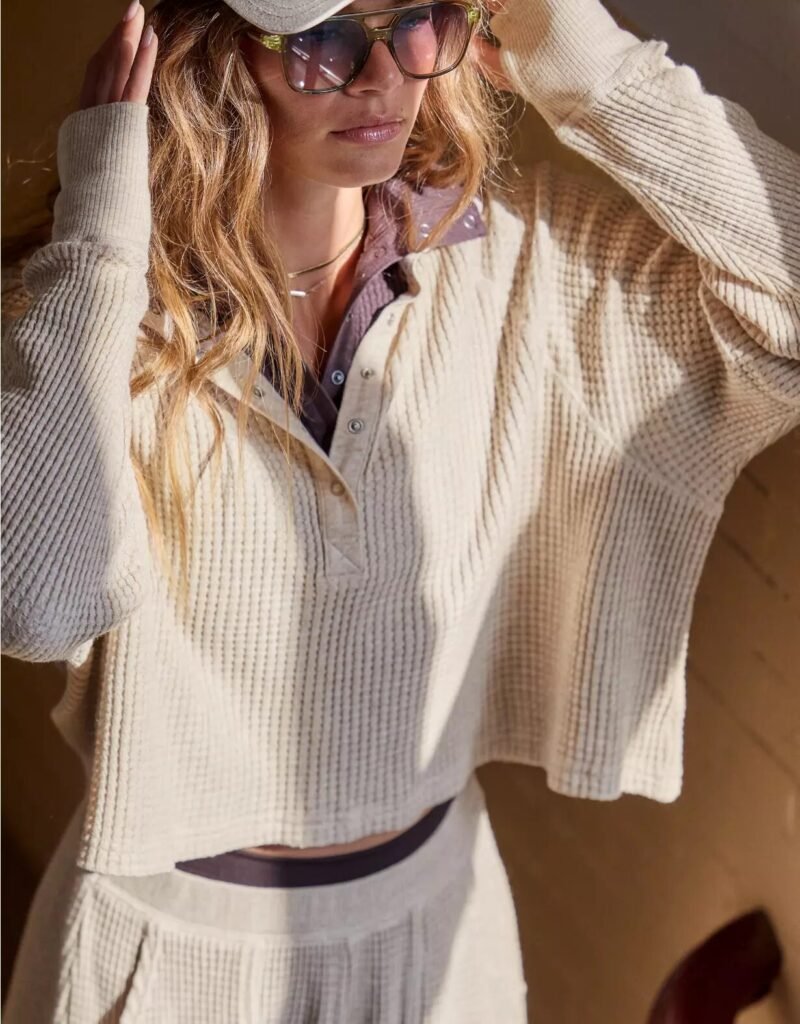
How should your brand position waffle fabric? Here are the current market trends we are observing:
The “Elevated Home” Aesthetic
Post-pandemic fashion has seen a permanent shift toward “Soft Dressing.” Waffle matching sets (shorts + button-downs) in earthy tones like oat, sage, and charcoal are currently top-performers for DTC (Direct-to-Consumer) brands.
The Modern Workwear Henley
The Henley shirt is the spiritual home of waffle fabric. By using a heavier 300 GSM waffle and adding contrast twill tape at the placket, brands can create a rugged, “workwear-chic” item that commands a higher retail price point than a standard tee.
Tech-Waffle for Performance
By using moisture-wicking synthetic yarns, waffle becomes a technical mid-layer for hiking and outdoor sports. The “grid-fleece” style is a favorite for technical outerwear brands looking for lightweight warmth.
Manufacturing Challenges: What Brands Need to Avoid
Producing a high-quality waffle garment is significantly more complex than working with standard jersey. Here are several key points to consider:
The Shrinkage Factor
Waffle is a “relaxed” knit. Because of its three-dimensional structure, it has a high degree of residual shrinkage. If a factory does not properly pre-shrink the fabric before cutting, a Medium-sized shirt can easily turn into an Extra-Small after the first home wash.
Seam Integrity
Because waffle fabric is thicker than jersey, seams can become bulky and uncomfortable.
- Flatlock Stitching: For premium collections, we recommend flatlock seams. This reduces bulk and provides an athletic, high-end aesthetic.
- Overlock with Topstitch: Best for a more rugged, traditional thermal look.
Torquing (Fabric Twisting)
Low-quality waffle knits often suffer from “torquing,” where the side seams of a shirt twist toward the front after washing. This is caused by unbalanced yarn tension during the knitting process.
Manufacturing Excellence: Partnering for Success
Waffle fabric is a versatile, comfortable, and durable option that has found its place in many clothing collections. Whether you’re designing loungewear, activewear, or homewear, this unique fabric offers a blend of style and functionality that appeals to today’s consumers.
If you’re looking to elevate your clothing line with a fabric that combines luxury with practicality, waffle fabric might just be the perfect choice.