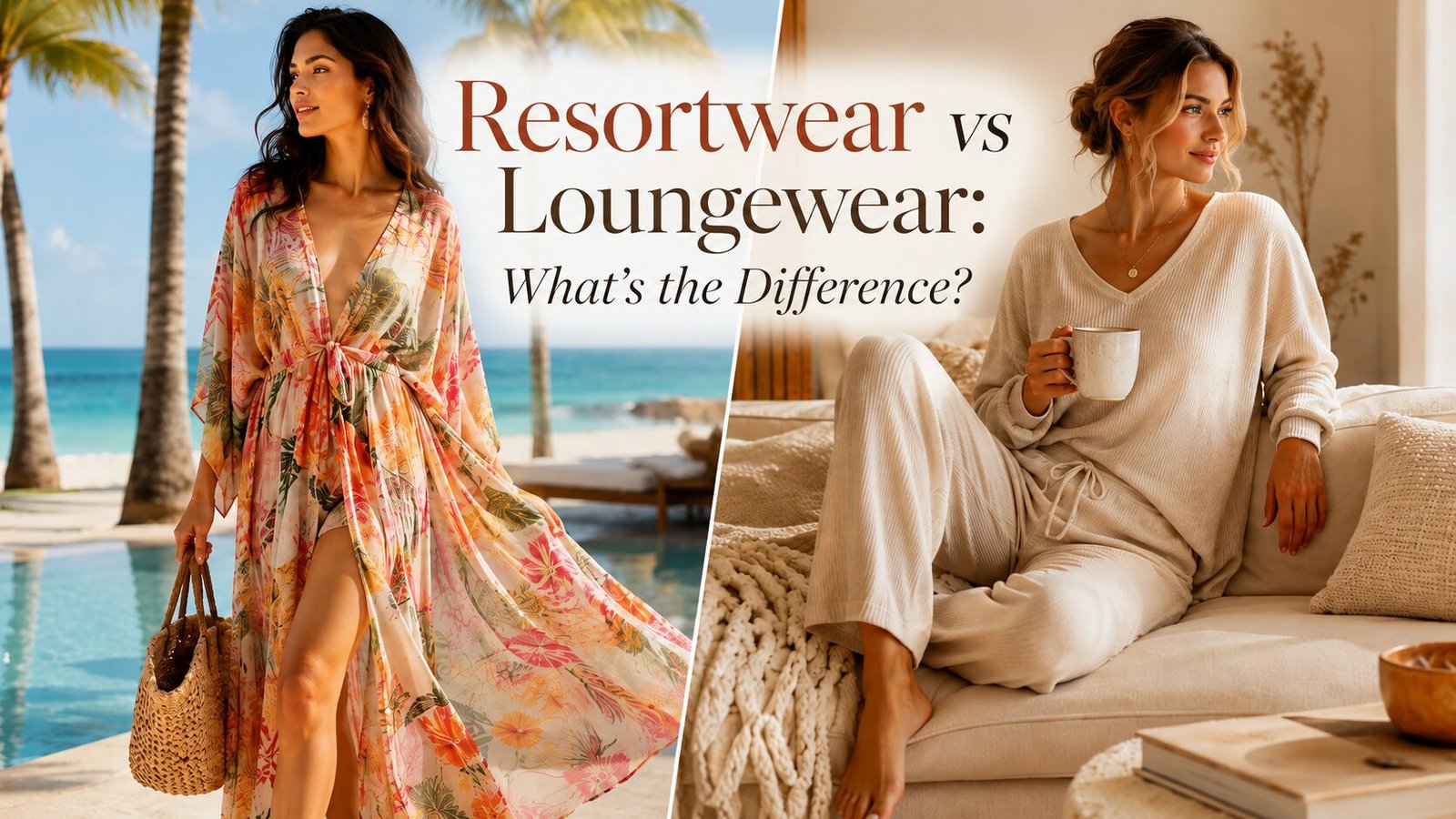
Resortwear and loungewear are often grouped together because both styles focus on comfort, ease, and effortless dressing. However, they are not the same category.
Resortwear is designed for travel, vacations, warm-weather styling, and relaxed outdoor moments, while loungewear is made for home, casual routines, and everyday comfort.
Below, we’ll look at the key differences between resortwear and loungewear, so you can better understand where each category fits in a women’s clothing collection.
Quick Comparison: Resortwear vs Loungewear
| Category | Resortwear | Loungewear |
|---|---|---|
| Main Purpose | Vacation, travel, beach-to-dinner dressing | Home, casual daily wear, relaxed routines |
| Style Direction | Airy, polished, vacation-ready | Soft, cozy, effortless |
| Common Pieces | Kaftans, sarongs, cover-ups, maxi dresses | Lounge sets, pajama sets, knit pants, hoodies, soft tees |
| Typical Fabrics | Linen, cotton voile, chiffon, rayon, lightweight knits | Modal, cotton, fleece, French terry, rib knit, jersey |
| Wearing Scene | Resorts, beaches, cruises, holidays, summer outings | Home, weekends, travel days, casual errands |
| Fit | Relaxed but often styled and flowy | Relaxed, soft, and comfort-focused |
What Is Resortwear?

Resortwear refers to clothing designed for vacations, warm destinations, beachside settings, and relaxed travel occasions. It usually sits between swimwear and ready-to-wear. A resortwear piece should feel easy enough for a holiday but polished enough to wear outside the room or hotel.
Common resortwear items include
- cover-ups
- kaftans
- sarongs
- wide-leg pants
- maxi dresses
- matching summer sets
- lightweight jumpsuits
These pieces are often styled over swimwear during the day, then worn for lunch, or casual resort dinners.
The key idea behind resortwear is relaxed elegance. It should feel light and effortless, but not careless. Breathable fabrics, flowing shapes, soft drape, and simple styling details help resortwear create that easy vacation look without feeling too casual.
What Is Loungewear
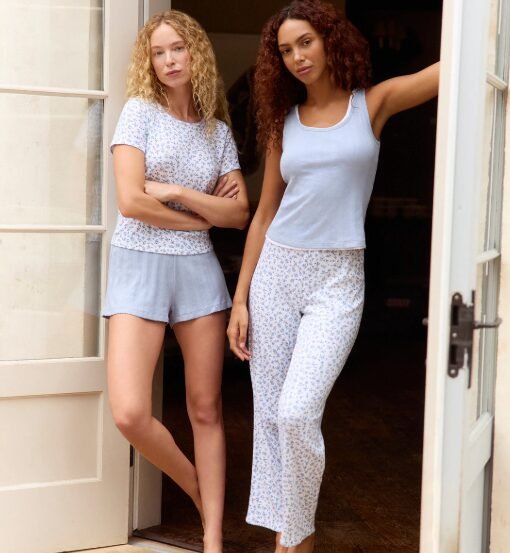
Loungewear refers to comfortable clothing designed for relaxed parts of daily life, such as staying at home, traveling, weekends, or casual routines. Unlike traditional pajamas, modern loungewear is often made to look presentable enough for quick errands, coffee runs, or relaxed social settings.
Typical loungewear pieces include:
- matching lounge sets
- soft joggers
- ribbed tops
- pajama-style sets
- oversized tees
- hoodies and sweatshirts
- knit pants
- cardigans
- lounge dresses
Good loungewear should feel soft on the body, allow easy movement, and make daily dressing simple. A modal lounge set or cotton jersey dress, for example, can feel comfortable at home while still looking clean enough for casual daytime wear.
Difference Between Resortwear and Loungewear
Wearing occasion
The biggest difference is the wearing occasion.
Resortwear is made for destination dressing. It often connects to travel, swimwear, beachwear, and warm-weather styling.
Loungewear is made for everyday comfort, usually with a stronger connection to home, sleep-adjacent dressing, and casual routines.
That difference affects everything: fabric choice, silhouette, color palette, styling, and how customers expect to wear each piece.
Fabric Differences
Fabric is one of the clearest ways to separate resortwear from loungewear.
Resortwear Fabrics
Resortwear usually uses lightweight, breathable, and flowing fabrics. These fabrics need to feel cool in warm weather and look elegant in movement.
Common resortwear fabrics include:
- Linen and linen blends
- Cotton voile or cotton gauze
- Rayon and viscose
- Chiffon
- Lightweight crochet
- Lightweight jersey
- Silk-like or satin-touch fabrics
These materials help create airy silhouettes, draped shapes, and relaxed vacation looks.
Loungewear Fabrics
Loungewear usually focuses more on softness, stretch, and skin comfort. The fabric should feel pleasant for long wear and support relaxed movement.
Common loungewear fabrics include:
- Modal
- Cotton jersey
- Rib knit
- French terry
- Fleece
- Waffle knit
- Brushed knit fabrics
- Stretch cotton blends
These fabrics make loungewear feel cozy, flexible, and suitable for daily wear.
Style and Silhouette Differences
The difference is not only about the pieces themselves, but also about how the garments are shaped and styled.
Resortwear silhouettes usually feel more open, airy, and fluid. Designers often use loose shapes, soft drape, side slits, wrap details, or adjustable ties to create movement and make the garment easy to layer over swimwear. y.
Loungewear silhouettes are usually softer and more comfort-focused. The fit often follows the body in a more relaxed way, with elastic waists, stretch fabrics, dropped shoulders, or easy pull-on shapes.
Color and Print Differences
Resortwear often uses colors and prints that connect with travel and warm weather. Tropical prints, stripes, white, ivory,and botanical patterns are common.
Loungewear usually leans toward calmer and more versatile colors. Neutrals, soft pastels, muted earth tones, heather grey, cream,and black are popular because they feel easy to wear at home and in daily routines.
This does not mean resortwear must always be bright or loungewear must always be neutral. The difference is more about the overall mood.
Where Resortwear and Loungewear Meet
Although resortwear and loungewear serve different purposes, the line between them is not always strict. Modern women’s fashion often values comfort, versatility, and easy styling, which allows some pieces to work in both categories.
A linen matching set, for example, may feel like resortwear when paired with sandals, swimwear, and vacation accessories. In a softer color palette, the same type of set can also work as elevated loungewear for travel days, or casual routines.
This is why versatile pieces have strong value for women’s clothing brands. Designs that can move between home, travel, and vacation settings often feel more practical to customers and easier to style across different occasions.
Which Category Is Better for Your Brand?
The right choice depends on your customer, price positioning, and how each product fits into your overall range.
Resortwear
Resortwear is a good direction if your brand wants to build a stronger seasonal story. It works especially well for summer drops, swimwear extensions, and visually driven collections.
The value is not only in the garment itself, but in the lifestyle it creates. Resortwear can make a collection feel more aspirational, styled, and campaign-ready.
Loungewear
Loungewear is a better fit if your brand focuses on repeat wear, comfort-led essentials, and products with longer selling cycles. These pieces are usually less dependent on one season, which makes them useful for year-round product planning.
Its value comes from wearability. Customers are more likely to return to loungewear when the fabric feels good, and the style fits naturally into everyday life.
A Balanced Collection
For many women’s clothing brands, the strongest approach is to combine both. Loungewear supports everyday wearability, while resortwear adds freshness, and a stronger vacation mood to the collection.
Together, they help create a collection that feels practical, stylish, and easier to market across different moments of the year.
Conclusion
Resortwear and loungewear may both focus on comfort, but they create different feelings in a women’s collection. Resortwear brings color and a stronger vacation mood, while loungewear supports everyday ease and repeat wear.
The best choice depends on the brand positioning . If you are developing resortwear,or loungewear we’d be happy to help bring your ideas into production.