The global resort and beachwear market has evolved far beyond basic swimwear. Today, it represents a multi-billion-dollar lifestyle category bridging the gap between functional performance and high-fashion leisure. Understanding the precise anatomy of beachwear is essential, whether you are curating a personal summer wardrobe or engineering the next breakthrough seasonal collection.
This guide breaks down the essential categories of contemporary beachwear, analyzing the form, function, and how to choose.
Swimwear vs. Beachwear: What’s the Difference?
While often used interchangeably in casual conversation, these two terms represent distinct product categories with different design intent, material engineering, and use cases.
Swimwear is specifically engineered for immersion in water. The focus is entirely on hydrodynamic performance, minimal water absorption, elasticity, and resistance to harsh elements like chlorine, salt water, and intense UV rays. Common fabrics include nylon, spandex, and polyester blends.
Beachwear is an umbrella term that encompasses swimwear but extends to everything worn around the water. It is designed for land-to-sea transitions, boardwalk dining, and poolside lounging. The focus shifts toward breathability, fluid silhouettes, aesthetic storytelling, and quick-drying capabilities. Common fabrics include linen, organic cotton, chiffon, and knit crochet.
In short: All swimwear is beachwear, but not all beachwear is swimwear.
1. Swimwear:Core Series
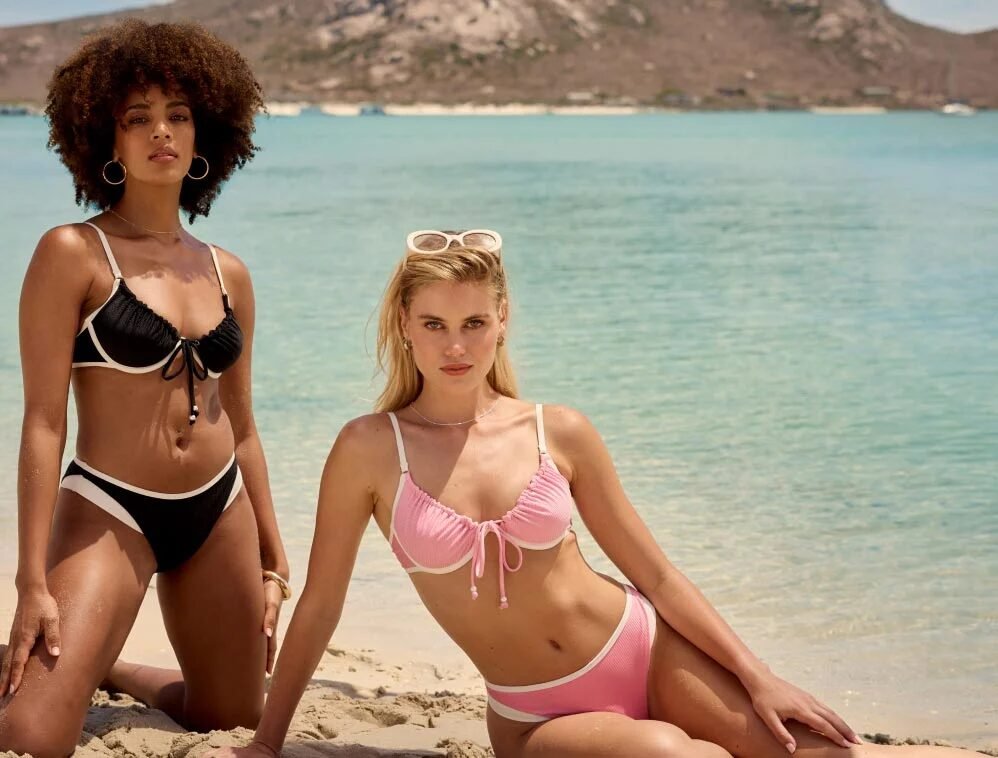
At the heart of any beach-ready collection is swimwear. This category demands a careful balance of textile engineering (such as UV protection and chlorine resistance) and silhouette innovation.
- Bikinis: The quintessential two-piece swimsuit. From classic triangles to bandeaus and high-waisted retro cuts, the bikini offers the highest degree of modularity and mix-and-match versatility.
- One-Piece Swimsuits: Once viewed as purely conservative, the modern one-piece has undergone a high-fashion renaissance. Utilizing dramatic cut-outs, asymmetrical necklines, and shaping innerwear technology, it serves as a sophisticated statement piece that transitions effortlessly from pool to lounge.
- Tankinis: Combining the midriff coverage of a one-piece with the two-piece convenience of a bikini, the tankini features a tank-top style upper paired with standard swim bottoms.
- Swim Dresses: A silhouette focused on extended coverage and a feminine, vintage-inspired aesthetic. It features an integrated skirt overlaying attached swim briefs.
- Swim Shirts & Rash Guards: Rooted in surf culture, these performance-driven pieces prioritize sun protection (UPF50+) and chafing prevention. Modern iterations utilize lightweight, eco-conscious compression fabrics to blend athleticism with style.
- Boardshorts & Swim Trunks: The staples of lower-body swimwear. While traditional swim trunks rely on elastic waistbands and mesh linings, boardshorts feature a rigid, lace-up waistband engineered to stay secure in heavy surf.
- Wetsuits: Specialized neoprene garments designed for thermal insulation and abrasion resistance during technical water sports like surfing, diving, and wakeboarding.
2. Cover-Ups & Resort Wear: From Lounge to Sand

The transition from the shoreline to the boardwalk requires versatile layers. This category focuses on fluid silhouettes, breathability, and quick-drying capabilities.
- Sarongs & Wraps: The ultimate minimalist beach accessory. A simple length of fabric that can be knotted at the waist as a skirt or tied at the neck as an instant dress, offering maximum styling flexibility with minimal packable volume.
- Kimonos & Kaftans: Characterized by flowing lines and bohemian elegance. Kaftans offer full-body, loose-fitting coverage, while open-front kimonos add a layered, airy sophistication to any swimwear base.
- Beach Dresses & Tunics: Easy, slip-on garments crafted from lightweight materials like linen, organic cotton, or crochet. These pieces are designed to be thrown over damp swimwear while remaining polished enough for an open-air lunch.
- Beach Pants & Shorts: Relaxed-fit bottoms, often featuring elasticated or drawstring waists. Palette choices favor wide-leg linen trousers and crochet shorts that balance sun protection with effortless breathability.
3. Beach Accessories: The Curated Finish
A beach ensemble is incomplete without the functional accents that protect against the elements while anchoring the overall visual aesthetic.
- Sun Hats: Essential for UV defense, ranging from wide-brimmed straw hats and packable raffia fedoras to trendy bucket hats.
- Sunglasses: The intersection of ocular health and personal style. Current market dominance relies on polarized lenses paired with timeless acetate frames or sporty, aerodynamic silhouettes.
- Footwear: The spectrum ranges from utilitarian rubber flip-flops and water shoes to elevated leather slides and woven espadrilles capable of handling hot sand and boardwalk terrains.
- Crochet Bags: The quintessential seaside carryall. Woven textures like crochet, raffia, and macramé are highly sought after for their organic aesthetic, breathability, and ability to expand to hold towels, SPF, and essentials.
What to Pay Attention to When Buying or Designing Beachwear
Whether sourcing fabric for a new collection or investing in a premium personal wardrobe, look past the aesthetic appeal and evaluate these four critical pillars:
Fabric Composition & Performance Metrics
For pieces meant for the water, look for high-grade synthetic blends ($80\%$ nylon or polyester mixed with $20\%$ spandex or Lycra). Premium swimwear should carry a UPF (Ultraviolet Protection Factor) rating of 50+, blocking out 98% of harmful UV rays.
For resort wear, prioritize natural, breathable long-staple fibers like linen and organic cotton, which allow heat to escape and dry quickly.
Construction & Hardware Quality
Examine the seams. Quality swimwear requires flatlock stitching or zig-zag stitching, which allows the fabric to stretch without snapping the threads. Hardware—such as zippers, clasps, and adjusters—should be made from chlorine-resistant metals or high-density polymers that will not rust, tarnish, or become scalding hot in the sun.
Fit, Support, and Shape Retention
Swimwear relies heavily on tensile strength. Premium pieces utilize double-lining (often with power mesh panels) to provide structural support and body-contouring properties without feeling restrictive. Ensure that elastane components are engineered to resist degradation from body oils, sunscreens, and chlorine, preserving the garment’s original shape over time.
Versatility and Multi-Occasion Wear
The modern traveler seeks efficiency. High-value beachwear pieces are those that can pivot across settings. A high-neck one-piece should double as a bodysuit when paired with linen trousers, and a luxury kaftan should seamlessly transition from a poolside cover-up to an elegant evening dinner dress.
Conclusion
Modern beachwear is no longer confined to the water’s edge. The boundaries between swimwear, resort wear, and streetwear continue to blur. Succeeding in this space requires a deep appreciation for fabric performance, silhouette versatility, and the seamless transition from sun-soaked relaxation to evening leisure.