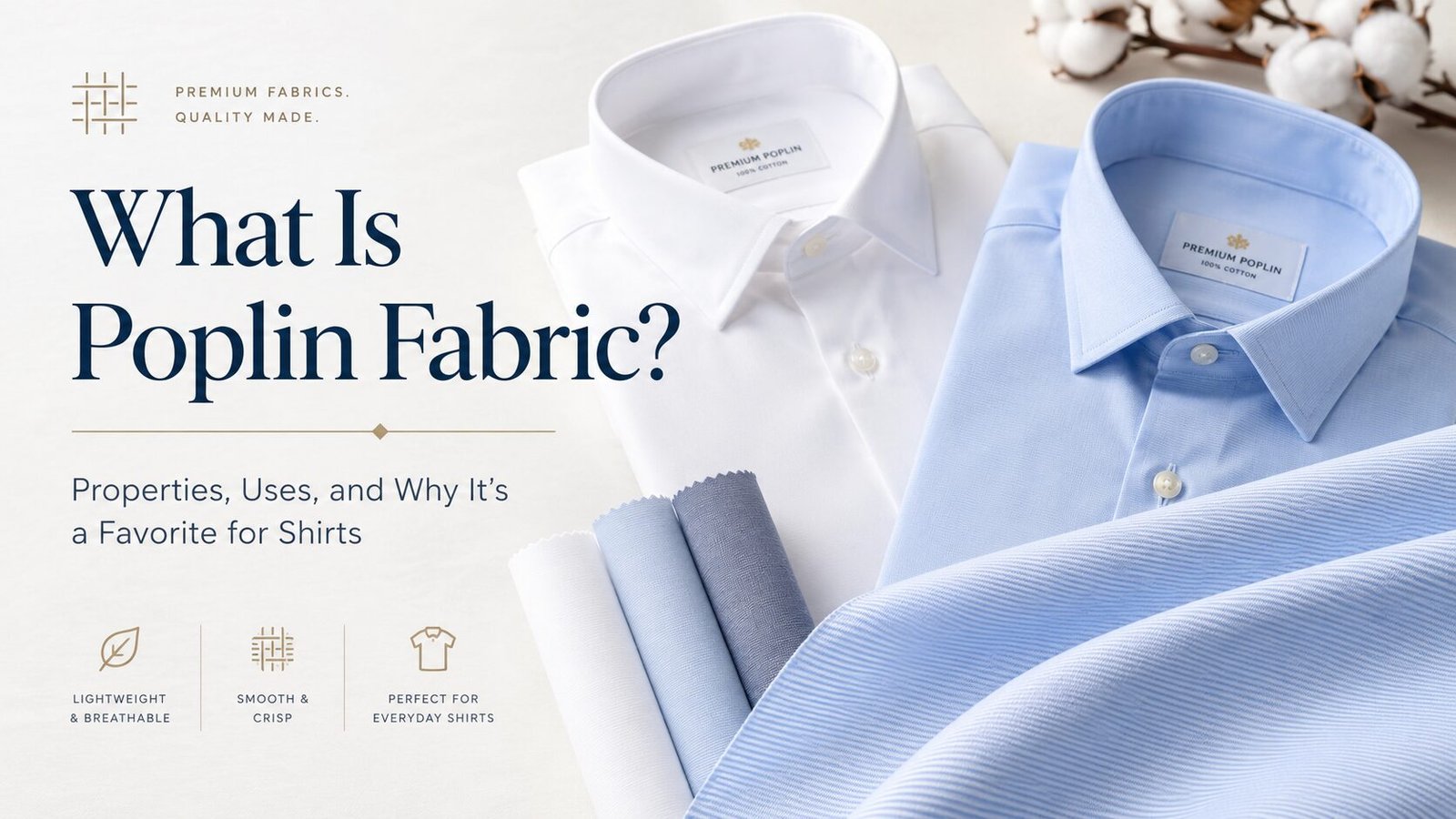
If you’ve ever admired a crisp, sharp dress shirt that feels incredibly lightweight yet holds its shape all day, you have likely experienced the magic of poplin.
For fashion brands, choosing the right material can make or break a clothing line. Poplin is a staple in the textile industry, celebrated for its versatility, durability, and premium finish. But what exactly is poplin fabric, and why should it be the foundation of your next collection?
Let’s dive into the technicalities, characteristics, and manufacturing insights of this classic textile.
What is Poplin Fabric?
Historically, poplin (originally called papeline) was developed in Avignon, France, during the 14th century, named after the papal residence. Back then, it was a luxury fabric woven with a silk warp (lengthwise threads) and a heavier wool weft (crosswise threads).
Today, modern textile manufacturing has evolved. Poplin is defined not by its raw material, but by its specific weave technique.
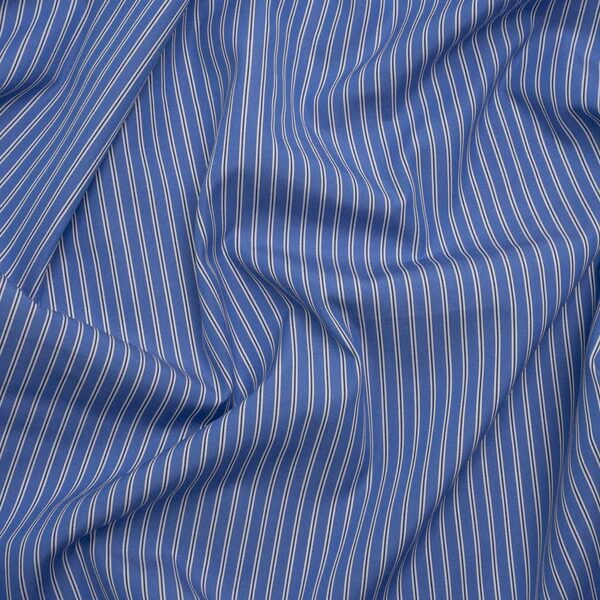
Poplin is a plain-weave fabric with a unique twist: it uses fine, tightly packed warp threads paired with thicker, heavier weft yarns. This creates a subtle, horizontal ribbing effect (called a cord) that is nearly invisible to the naked eye but gives the fabric its signature structural integrity.
While traditional poplin used silk and wool, today’s industry standard typically utilizes:
- 100% Cotton Poplin: The premium choice for high-end dress shirts, blouses, and summer dresses.
- Cotton-Polyester Blends: Highly durable and wrinkle-resistant, ideal for high-volume uniform manufacturing and commercial apparel.
- Stretch Poplin: Infused with a small percentage of elastane (Spandex) to provide comfort and flexibility in modern tailored fits.
Key Characteristics of Poplin
Cotton poplin properties make it a dream for consumers. Here is why this fabric remains an industry favorite:
1. Crisp and Structured
Thanks to the tightly woven plain weave, poplin naturally retains its shape. It does not drape loosely like linen or rayon; instead, it offers a clean, structured silhouette that looks sharp and professional.
2. Lightweight and Breathable
Despite its tight weave, poplin is exceptionally lightweight. It allows air to circulate freely, making it the premier fabric choice for spring and summer collections, tropical weight garments, and breathable corporate wear.
3. Smooth and Soft to the Touch
Poplin undergoes a manufacturing process that removes surface fuzz, resulting in a remarkably smooth, soft face. It feels comfortable against the skin, eliminating the scratchiness often associated with other durable weaves.
4. High Durability
The dense weave means poplin can withstand frequent laundering and heavy wear. It doesn’t trap odors easily, it resists tearing, and it holds up beautifully over years of use—making it a highly sustainable choice for slow-fashion brands.
Poplin vs. Oxford vs. Twill
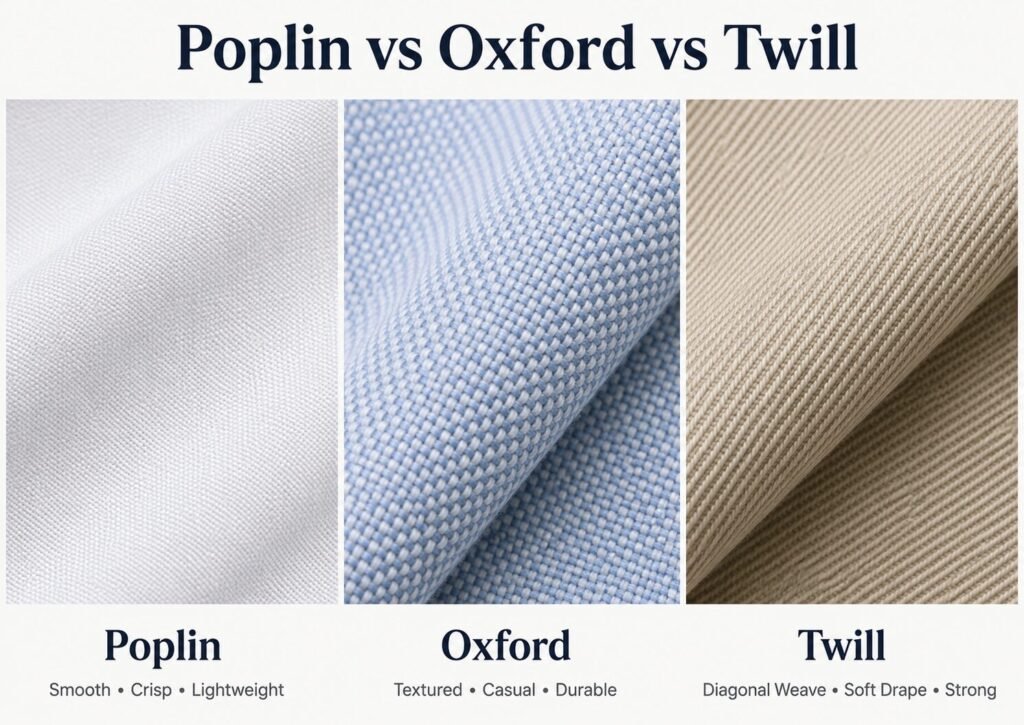
When sourcing materials for a garment line, designers often debate between Poplin, Oxford, and Twill. Here is how they stack up:
| Feature | Poplin | Oxford | Twill |
| Weave Type | Plain weave (Fine warp, thick weft) | Basketweave (Two or more threads over/under) | Diagonal weave pattern (Like denim/gabardine) |
| Texture | Ultra-smooth, flat | Textured, slightly bumpy | Diagonal ribs, heavy feel |
| Weight | Lightweight | Medium to heavy | Medium to heavy |
| Best Used For | Crisp dress shirts, lightweight summer dresses, luxury pajamas | Casual button-downs, preppy sportswear, heavy-duty uniform shirts | Heavy tailored shirts, trousers, trench coats, outerwear |
If you need a sleek, formal, or lightweight finish, choose Poplin. If you want a casual, rugged texture, go with Oxford. For heavy weight and drape, choose Twill.
How We Ensure Premium Poplin Quality?
As a dedicated apparel manufacturer, we know that not all poplin is created equal. A low-grade poplin can wrinkle excessively, shrink after the first wash, or feel stiff.
When manufacturing poplin shirts and garments for our brand partners, we control quality through exact technical benchmarks:
- High Yarn Counts: We source long-staple cotton and offer high thread counts (ranging from 80s to 120s two-ply yarns). This achieves an incredibly silky finish without compromising the fabric’s strength.
- Controlled Shrinkage: Poplin can be prone to shrinking if not treated. We subject our fabrics to rigorous pre-shrinking processes (sanforization) to ensure that the garments your customers buy fit perfectly, wash after wash.
- Precision Dyeing and Printing: Because poplin is flat and smooth, it takes dyes and digital prints exceptionally well. We use eco-friendly, color-fast dyes that prevent fading, ensuring deep blacks, brilliant whites, and vivid patterns.
Elevate Your Next Collection with Premium Poplin
Whether you are designing a line of minimalist summer dresses, launching a premium menswear line, or sourcing durable corporate uniforms, cotton poplin offers the perfect balance of luxury and utility.
Ready to feel the difference for yourself? [Contact our team today] to request a fabric swatch book or to discuss custom manufacturing options for your upcoming fashion line. Let’s build your next bestseller together.