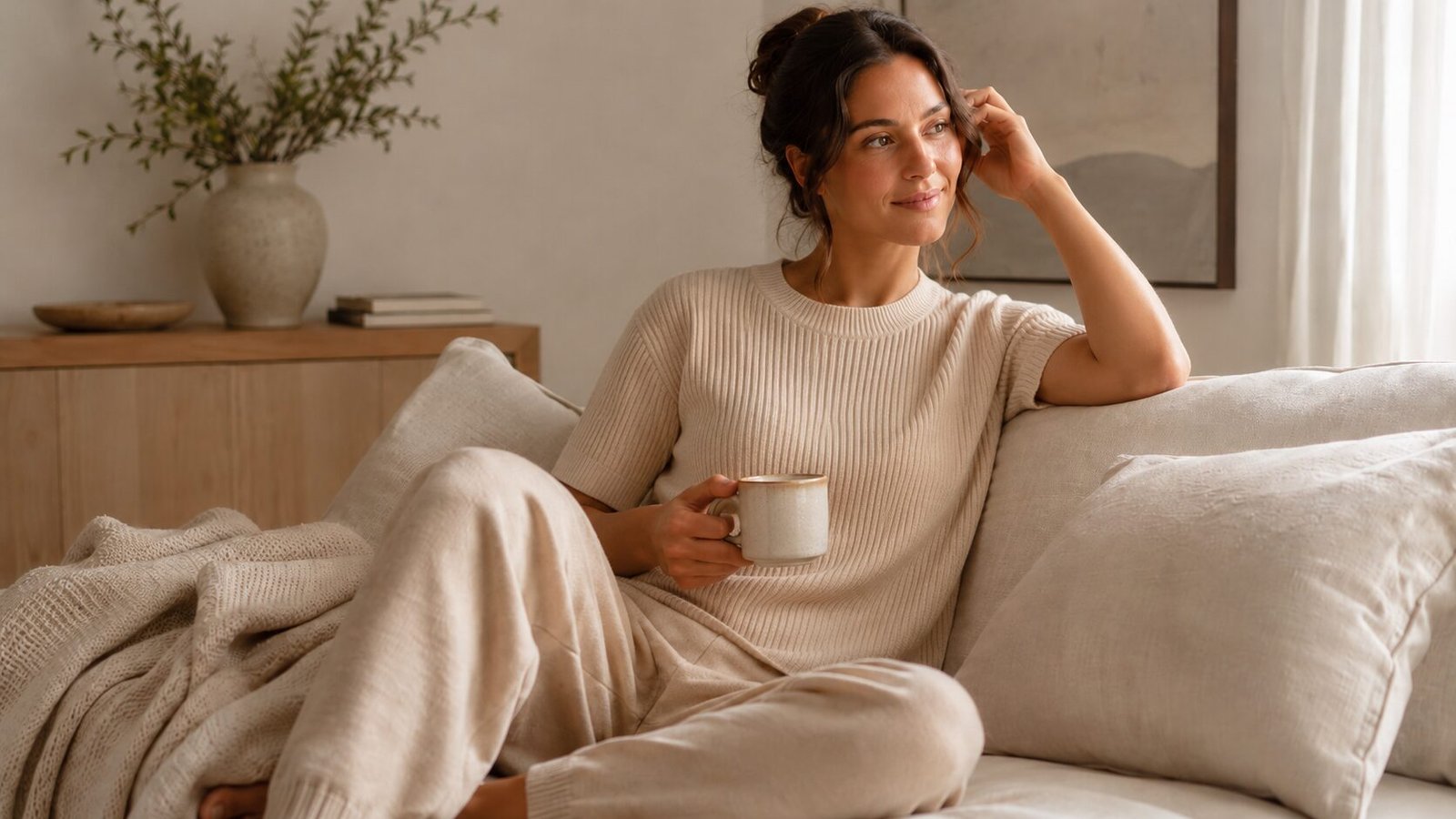
Small design details can make a big difference in how premium loungewear looks and feels. In a category built around comfort, the most elevated pieces are often the ones that feel soft, fit naturally, and look clean without relying on complicated design.
For clothing brands, these details matter because customers notice more than the first touch. They also pay attention to how a garment drapes, moves, washes, and holds its shape over time. In this article, we look at six practical design details that can help simple loungewear styles feel more refined and well made.
1. Choose Fabric That Feels Soft but Holds Its Shape
Fabric is one of the first things customers notice. A soft hand feel is important, but the fabric also needs enough stability to keep the garment looking good after washing and wearing.
Match the Fabric to the Style
Different loungewear styles need different fabric qualities. A relaxed tee may need a lightweight cotton jersey, while a hoodie needs more structure. A ribbed lounge dress may need stretch and recovery, while pajama sets often need a smooth, breathable fabric.
Common fabric options for loungewear include:
- Cotton jersey for T-shirts, tanks, and lightweight sets
- French terry for hoodies, sweatshirts, shorts, and joggers
- Rib knit for fitted tops, dresses, and matching sets
- Modal blends for soft pajamas and elevated basics
- Waffle knit for cozy tops, robes, and lounge pants
- Fleece for warmer loungewear and winter collections
The best fabric is not always the most expensive one. It should match the garment’s purpose, price range, season, and target customer.
Consider GSM, Drape, and Recovery
Fabric weight has a strong impact on the final look. If the fabric feels too thin, the garment may look cheap or lose shape quickly. If it feels too heavy, it may lose the easy comfort customers expect from loungewear.
2. Improve the Fit
Premium loungewear should feel relaxed, but it should not look careless. The difference often comes from small pattern adjustments.
Balance Comfort and Shape
A good loungewear fit gives the body enough room to move while still keeping a clean silhouette. For example, an oversized sweatshirt may have dropped shoulders, but the sleeve length, hem width, and body length still need balance.
For lounge pants, the waist, rise, hip width, and leg opening all affect the final look. A wide-leg pant should feel relaxed, but it should not look bulky around the waist or hips.
Keep Sizing Consistent
Fit should also work across the full size range. A sample may look good in size S or M, but the garment still needs careful grading for larger and smaller sizes.
This is especially important for matching sets. If the top and bottom lose proportion across sizes, the set can look less refined.
3. Necklines, Cuffs, and Hems
Loungewear spends its life stretching and recovering – at cuffs, necklines, and hems. Standard 1×1 ribbing works, but premium products use 2×2 or 3×2 ribbing with lycra content (5–8% elastane in the rib, not just the main body). This returns to shape without bagging out after stretched multiple times.
The rib should also match the main fabric in weight and stretch. If the rib is too light, it may collapse. If it is too firm, it can pull against the body fabric and create puckering.
4. Use Neat Seams and Stitching
The fastest way to identify low-end loungewear is visible, loose, or wavy seams.
Match Stitching to the Fabric
For basic knit loungewear, 4-thread overlock seams are commonly used on side seams, sleeve seams, and inseams because they provide both stretch and strength. For hems on T-shirts, and wide-leg pants, coverstitch gives a cleaner finish and avoid the fabric to stretch without breaking the thread.
Reinforce High-Stress Areas
Even relaxed loungewear has stress points. Pocket openings and side slits can be secured with bar-tacks, drawstring holes may need reinforced stitching or metal eyelets, and waistbands should use stable stitching to prevent twisting or rolling after wear.
5. Hardware – Zippers, Drawcords & Eyelets
A zipper that sticks, a drawcord with frayed ends, or eyelets that chip after washing can make an otherwise good garment look lower quality.
- Zippers: YKK or comparable brand, with self-locking sliders (stays where you stop) and matching tape color to the fabric. For metal zippers, use antique brass or matte nickel finishes – shiny silver looks low-end. Always add a zipper garage (small fabric flap at the top) to prevent chin irritation.
- Drawcords: Flat cotton or recycled polyester cords with tipped ends (metal or heat-sealed plastic) instead of raw cut ends. Better yet, use hidden elastic loops inside the waistband so the cord never twists.
- Eyelets & grommets: Matte or brushed metal finishes, properly set without sharp edges. Avoid painted eyelets that chip after three washes.
6. Pocket Engineering – The Inside-Out Test
Pockets are a sign of careful design. Low-end loungewear adds a simple side-seam pocket with a raw edge inside. Premium versions incorporate:
- Curved pocket openings that follow the hand’s natural angle (not a straight slash) – reduces gaping when standing.
- Facing or binding on the pocket opening’s interior edge – prevents stretching and adds a professional finish when the pocket is turned out.
- Reinforced stress points – bar tacks at both ends of pocket openings, especially on sweatpants and hoodies.
- Patch pockets on tops with a triple-stitch topstitching (two needles, 6mm apart) – visible, intentional, and durable.
For a quiet luxury look, some brands use hidden zipper pockets inside the side seam – a detail that adds functionality without breaking the clean silhouette.
Why These Details Matter for Your Brand?
For brands, these subtle design details directly impact profit margins, return rates, and repeat purchase rates.
A poorly made, inexpensive garment might pass initial inspection, but the real test comes after multiple wears and washes. When the neckline deforms or the fabric loosens, these issues lead to negative reviews, returns, and a decline in consumer confidence in the brand.
In the highly competitive loungewear market, where many fabric blends and styles are largely similar, these details become a true differentiating advantage. They help justify higher wholesale prices, prevent the brand from appearing generic, and create long-term value by increasing customer satisfaction and reducing quality complaints.
Conclusion
High-quality loungewear does not need complicated design. Customers often value the texture, comfort, and long-term wearability of the garment more than overly decorative details.
For brands developing premium loungewear, focusing on fabric feel, fit, stitching, hardware, and construction details can help simple styles look more refined and hold up better over time.